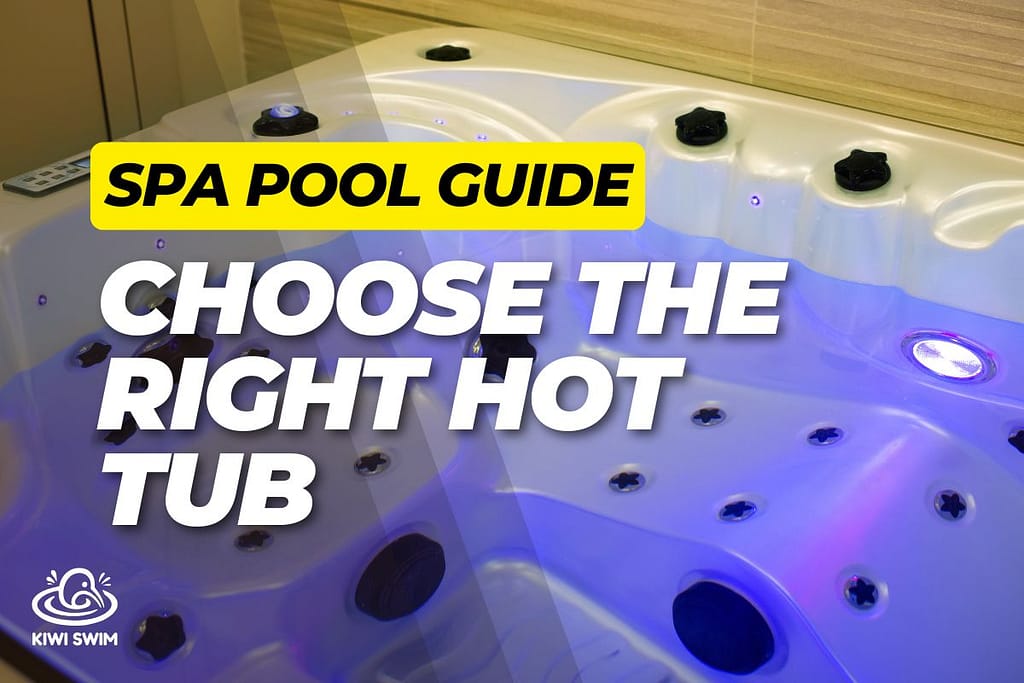
Buying a spa pool is a bigger decision than it might first appear. The right one can give you years of relaxation, hydrotherapy and family use. The wrong one can leave you with high power bills, difficult maintenance, access problems or a spa that’s simply too small, too large or poorly suited to your property.
If you’re looking at spa pools for sale, you’ll quickly find a huge range of options. There are portable spa pools, inflatable models, swim spas, small two-person spas, large family spas and permanently built options. Prices can vary dramatically, and the purchase price is only part of the total cost of ownership.
This guide explains the main types of spa pools available in New Zealand, the difference between a spa, hot tub and Jacuzzi, what they cost, what to look for before buying and the practical things many people don’t think about until after their new spa arrives.
Spa pool, hot tub or Jacuzzi: What’s the difference?
In New Zealand, these terms are often used interchangeably, and in everyday conversation that’s usually fine.
Spa pool
A spa pool, or spa, is the most common term used in New Zealand. It generally describes a heated pool designed for relaxation, hydrotherapy and social use.
Most modern spa pools have:
- Heated water
- Pumps and filtration
- Water jets
- Seating or loungers
- A control system
- An insulated cover
Many are self-contained units, meaning the shell, pumps, heater and filtration equipment are built into the spa.
Hot tub
A hot tub generally means the same thing as a spa pool. The term can describe anything from a traditional timber tub heated by a fire to a modern acrylic spa with multiple pumps and jets.
In New Zealand, you may hear people use “hot tub” more commonly when talking about:
- Wood-fired tubs
- Simple soaking tubs
- Outdoor heated tubs
However, there isn’t a strict rule. A modern portable spa pool may also be called a hot tub.
Jacuzzi
Jacuzzi is actually a brand name, not a general name for every spa pool.
The brand became so well known that many people started using “Jacuzzi” to describe any spa with jets, much like some brand names become part of everyday language.
So, technically:
- A spa pool is a type of heated spa.
- A hot tub is a general term for a heated soaking tub or spa.
- A Jacuzzi is a specific brand.
If you’re searching online for a spa, you’ll often see all three terms used.
What to know before buying a spa pool
Before comparing models, decide how you actually plan to use your spa. This will narrow down your options far more effectively than simply comparing the number of jets or choosing the biggest model your budget allows.
Think about:
- How many people will normally use it?
- Do you want it mainly for relaxation or hydrotherapy?
- Do you want to entertain guests?
- How much space do you have?
- Where will it be installed?
- Can the spa physically get to that location?
- How much are you comfortable spending on power and maintenance?
- Do you have children or young children visiting the property?
- Will you use it year-round?
A spa pool is heavy, especially once filled with water and occupied. The base, access route and electrical setup should all be considered before you place an order.
In my experience, people often spend a lot of time choosing the spa itself but don’t think enough about where it will go and what needs to happen before installation day.
Different types of spa pools
There isn’t one type of spa that’s best for everyone. The right option depends on your budget, available space, intended use and how permanent you want the installation to be.
| Type | Advantages | Disadvantages | Best suited to |
|---|---|---|---|
| Portable spa pool | Wide range of sizes and features, relatively simple installation | Requires suitable base and electrical setup | Most homeowners |
| Inflatable spa pool | Low purchase cost, portable, easy to store | Less durable, limited insulation and performance | Temporary or budget use |
| 1 – 2 person spa pool | Compact, lower water volume, suits small spaces | Limited seating and entertaining space | Couples and individuals |
| Swim spa | Allows swimming and spa use in one unit | Large, expensive and requires significant space | Exercise and family use |
| Inground hot tub | Attractive integrated appearance | More complex and expensive construction | Major landscaping or pool projects |
| Concrete spa | Highly customisable and durable | Expensive and complex to build | Permanent high-end installations |
Portable spa pool
A portable spa pool is the type most people picture when they think of a modern spa. It’s a self-contained unit that sits above ground on a suitable base.
Portable spas are available in many sizes, from compact two-person models to large family and entertainment spas.
Their main advantages are convenience and flexibility. The shell, equipment and controls are supplied as part of the unit, so you don’t need to build a separate equipment room or install a complex circulation system.
That doesn’t mean installation is always as simple as dropping it in the backyard. You still need:
- A strong, level base
- Safe access for delivery
- Suitable electrical supply
- Proper drainage around the area
- Enough clearance for servicing equipment
The biggest practical issue is often getting the spa into position. Measure gates, paths, tight corners and overhead clearances before buying. A crane may be needed if the spa can’t be carried through to the installation area.
Inflatable spa pool
An inflatable spa pool is usually the cheapest way to get a hot-water spa experience at home.
These are generally made from reinforced inflatable materials and use an external or integrated pump and heater unit.
The advantages are obvious:
- Lower purchase price
- Easy to transport
- Can be packed away
- No major installation required
However, there are compromises.
An inflatable spa pool usually has less insulation, less powerful jets and a shorter expected lifespan than a quality rigid spa. It can also take time and energy to heat and maintain the water.
Safety is another important consideration in New Zealand. An inflatable spa capable of holding 400 mm or more of water is still subject to residential pool barrier requirements. Most inflatable spas won’t have a cover that meets the requirements for a compliant small heated pool safety cover, so fencing or another compliant barrier may be required.
Don’t assume that because an inflatable spa is temporary, the safety rules don’t apply.
1 to 2 person spa pool
A 1 – 2 person spa pool can be a very practical option for couples, individuals and properties with limited outdoor space.
Smaller spas generally use less water than large models and can fit into areas where a six or eight-person spa would be impractical.
They can be a good choice if you mainly want:
- Relaxation
- Couples use
- Hydrotherapy
- A compact spa for a townhouse or small section
Before choosing one, sit in the spa if possible. Seating layout matters more than the advertised number of seats.
A spa may technically seat two people but feel cramped depending on the shell design. Also consider whether you want upright seats, loungers or a combination of both.
Larger family and entertainment spas
Larger spas are designed for families or multiple users at once. They can have five, six, eight or more seating positions.
The benefits include:
- More room
- Different seat depths
- More jet configurations
- Better for entertaining
The trade-off is increased size, weight, water volume and usually a higher purchase price.
A large spa can also cost more to heat and maintain, particularly if the insulation or cover isn’t effective.
Think realistically about how often you will actually have six or eight people using it. A large spa that normally has two people in it may not be the most efficient choice for your household.
Swim spa
A swim spa combines elements of a swimming pool and spa.
Most include a swimming area with a current that you can swim against. Some models also include a separate heated spa section.
A swim spa can be useful if you want:
- Swimming or exercise
- Hydrotherapy
- Year-round use
- A smaller alternative to a traditional swimming pool
The main downside is cost and size. Swim spas are much larger than ordinary spa pools and require serious planning for access, foundations, electrical requirements and safety barriers.
They also have more equipment and water to maintain.
If you’re choosing between a pool and spa, a swim spa can seem like a good compromise. However, make sure you actually want to swim against a current. It’s not the same experience as having a full-size swimming pool.
Above-ground, inground and concrete spas
Above ground hot tub
An above ground hot tub or portable spa sits above the surrounding ground or deck level.
This is generally the easiest and most common installation.
Advantages include:
- Simpler installation
- Easier access to equipment
- Usually lower installation costs
- Can potentially be relocated
The main drawback is appearance. Some homeowners prefer the look of a spa integrated into a deck or landscaping design.
Inground hot tub
An inground hot tub is built into the ground or partially recessed into a deck or outdoor area.
This can create a more permanent, high-end appearance. However, installation is considerably more involved.
Excavation, drainage, waterproofing, structural support and equipment access all need to be properly planned.
One major mistake is building a portable spa into a deck without allowing enough access for future servicing or removal.
Spa pumps, heaters and plumbing don’t last forever. If equipment can’t be accessed, even a relatively simple repair can become expensive.
Concrete spas
Concrete spas are permanent structures built on site and can be designed in almost any shape or layout.
They can be integrated with:
- Concrete swimming pools
- Landscaping
- Water features
- Tiled finishes
- Custom seating
Concrete spas offer the most design flexibility, but they’re also among the most expensive and complicated options.
You’ll need professional design and construction, and building consent requirements may apply depending on the work involved. The equipment and plumbing are also separate from the shell, making the installation more like a small swimming pool project than buying a portable spa.
For most homeowners who simply want a good-quality spa, a portable model is usually the simpler option.
How much does a spa pool cost in New Zealand?
The cost of a spa pool can vary significantly depending on size, construction, insulation, equipment, features and brand.
Instead of focusing only on the advertised purchase price, consider the total cost of ownership.
You may need to budget for:
- The spa itself
- Delivery
- Crane access if required
- A concrete pad or suitable foundation
- Electrical work
- Pool barriers or a compliant safety cover
- Chemicals and testing equipment
- Water use
- Electricity
- Replacement filters
- Cover replacement
- Repairs and servicing
An inexpensive spa isn’t always the cheapest option over several years. Poor insulation, inefficient equipment or difficult-to-source replacement parts can add significantly to the long-term cost.
When comparing spa pools for sale, ask what is included in the advertised price. Delivery, cover lifters, steps, electrical connection and installation are not always included.
What affects spa pool running costs?
Running costs are one of the biggest concerns for potential owners.
The amount you spend depends on several factors:
- Spa size and water volume
- Insulation quality
- Cover quality
- Outside temperature
- Wind exposure
- Desired water temperature
- How often the cover is opened
- Electricity prices
- Pump and filtration settings
A well-insulated spa with a good-fitting cover can be much cheaper to run than a poorly insulated model in an exposed location.
The cover is particularly important. A large amount of heat can be lost through the water surface, so keeping the cover in good condition matters.
Once a cover becomes heavy, waterlogged or damaged, it usually becomes less effective.
Choosing the right size and seating layout
Don’t choose a spa based only on the number printed in the brochure.
A five-person spa can have five very different seats, while another five-person model may feel cramped.
Look at:
- Seat depth
- Footwell size
- Lounge positions
- Jet placement
- Space between users
- Entry and exit
- Whether the seats suit your height
If possible, visit a showroom and physically sit in a similar model.
Remember that a spa seat that feels comfortable dry may feel different once you’re floating in warm water.
For families, consider how children will use the spa and how water depth affects different users.
Spa jets: More isn’t always better
A spa with 100 jets isn’t automatically better than one with 40.
What matters is how effectively the jets are supplied with water and air, where they’re positioned and whether the pumps can provide enough flow.
A smaller number of well-designed jets can be more effective than a large number of weak ones.
Look for jets positioned around areas you actually want to target, such as:
- Lower back
- Upper back
- Shoulders
- Legs
- Feet
Also remember that hydrotherapy is not just about jet quantity. Pump power, plumbing design and seat position all affect the experience.
Where should you install a spa pool?
Choose the location carefully before buying.
A good spa location should consider:
Privacy
You’ll probably use the spa more if you feel comfortable using it.
Think about neighbours, sightlines and whether future landscaping could improve privacy.
Weather exposure
A completely exposed spa can lose heat more quickly and make getting in and out unpleasant during winter.
Shelter can improve comfort, but don’t create an area where moisture and ventilation become a problem.
Access
Think about two types of access:
- How the spa gets into position.
- How technicians will access equipment later.
Don’t permanently block access panels with decking, furniture or landscaping.
Drainage
Water will be splashed around the spa, and the spa may occasionally need to be drained.
The surrounding area should be designed so water doesn’t cause problems around the house or neighbouring property.
The base
A filled spa weighs a considerable amount.
The base needs to be level and capable of supporting the spa, water and occupants. A properly constructed concrete pad is a common solution, but the correct foundation depends on the spa and installation.
Always follow the manufacturer’s requirements.
Electrical requirements and installation
Spa pools involve water and electricity, so electrical work is not something to improvise.
The exact electrical requirements depend on the model. Some smaller spas may have different connection requirements from larger, more powerful units.
Before delivery, check with the supplier about:
- Required electrical supply
- Connection type
- Isolation requirements
- Cable requirements
- Whether a dedicated circuit is needed
Have electrical work completed by an appropriately qualified electrician.
If you’re installing an inground spa or integrating a spa with other equipment, plumbing and electrical planning should happen before construction begins.
Spa pool safety and NZ barrier requirements
This is something every potential spa owner in New Zealand should understand.
Residential pools capable of holding 400 mm or more of water generally require a physical barrier to restrict unsupervised access by children under five. This includes spa pools and temporary or inflatable pools.
Some small heated pools can use a complying safety cover instead of a surrounding fence.
According to Building Performance guidance, a small heated pool can use a safety cover as its barrier where it meets the relevant requirements, including:
- A water surface area of 5 m² or less
- Pool walls at least 760 mm above the adjacent floor or ground
- Walls that aren’t easily climbable
- No nearby objects that provide easy climbing access
- A safety cover that meets Building Code requirements
The cover must restrict entry by young children when closed, withstand a foreseeable load, be readily returned to the closed position and display the required child safety information.
Larger spas, spas that don’t meet these criteria, and many inflatable models may require a compliant pool barrier instead.
Building Performance also advises that a building consent is generally required before installing a pool barrier, while a complying safety cover for an eligible small heated pool is exempt from requiring a building consent.
Because individual installations can vary, check the current requirements with your local council before buying or installing a spa.
How much maintenance does a spa pool need?
A spa pool is smaller than a swimming pool, but that doesn’t mean you can ignore the water.
In fact, spa water can become unbalanced quickly because the water volume is relatively small and the water temperature is high.
A typical maintenance routine includes:
- Testing water regularly
- Maintaining appropriate sanitiser levels
- Checking pH and total alkalinity
- Cleaning or rinsing filters
- Keeping the waterline clean
- Checking water clarity
- Draining and refilling periodically
- Keeping the cover clean and in good condition
The exact schedule depends on how often the spa is used and the treatment system.
The biggest mistake I see with spa care is waiting until the water looks bad before doing anything. Clear water isn’t automatically clean or properly sanitised.
Regular testing and small adjustments are much easier than trying to recover badly neglected water.
Also, never mix pool or spa chemicals together unless the manufacturer specifically instructs you to do so.
Common mistakes people make when buying a spa pool
Buying the cheapest option without considering running costs
A cheap purchase price can be attractive, but poor insulation and inefficient equipment can cost more over time.
Look at the overall construction, insulation, cover quality, warranty and availability of replacement parts.
Choosing a spa that’s too large
Bigger isn’t always better.
A huge spa takes up more space, holds more water and may cost more to operate. Choose the size you’ll actually use.
Forgetting about delivery access
Measure everything before ordering.
A spa may not fit through your gate, around the side of the house or under low structures.
This can turn a simple delivery into a crane job.
Installing it without proper equipment access
If you’re building decking around a spa, plan removable sections or service access.
Eventually, something will need maintenance.
Ignoring safety requirements
Don’t assume a spa cover automatically meets New Zealand’s safety requirements.
Check whether your specific spa and cover qualify as a compliant small heated pool installation.
Underestimating maintenance
A spa isn’t maintenance-free.
Budget for chemicals, filters, electricity and occasional servicing before you buy.
When should you get professional help?
There are plenty of things you can handle yourself as a spa owner, including basic cleaning and routine water testing.
Professional help is sensible for:
- Electrical installation
- Complex plumbing
- Structural foundations
- Inground construction
- Building consent questions
- Pool barrier installation
- Major leaks
- Persistent equipment faults
- Problems with pumps or heaters
If you’re planning an inground hot tub, concrete spa or large swim spa, get professional advice early in the design process. Fixing drainage, access or equipment problems after construction is far more difficult than planning them properly from the beginning.
Frequently Asked Questions
Is a spa pool the same as a hot tub?
Generally, yes. In New Zealand, “spa pool” and “hot tub” are commonly used to describe heated pools used for soaking and relaxation. A hot tub can also refer to simpler or wood-fired tubs.
Is Jacuzzi the same as a spa pool?
Not exactly. Jacuzzi is a brand name. The term is often used casually to describe any spa with jets, but not every spa pool is a Jacuzzi.
Do spa pools need a fence in New Zealand?
Many spa pools require a compliant barrier, but some small heated pools can use a complying safety cover instead. The spa and cover must meet specific Building Code requirements. Check your installation with your local council or an appropriately qualified professional.
Can I put a spa pool on a deck?
Possibly, but the deck must be capable of supporting the considerable weight of the spa, water and occupants. Get professional advice if you’re unsure about the structure.
Are inflatable spa pools worth buying?
They can be a good budget option for occasional or temporary use. However, they generally don’t offer the same durability, insulation, jet performance or lifespan as a quality rigid spa. They may also still require a compliant safety barrier in New Zealand.
Is a swim spa cheaper than a swimming pool?
A swim spa can cost less than building some traditional swimming pools, but it is still a significant purchase and installation. Running costs, site preparation, equipment and safety requirements should all be included in the comparison.
Choosing the right spa pool for your home
The best spa pool isn’t necessarily the biggest, most expensive or the one with the highest number of jets. It’s the one that suits how you’ll actually use it, fits your property and remains practical to own over the long term.
Before buying, work through the basics: size, seating, location, access, foundation, electrical requirements, safety, running costs and maintenance.
Whether you’re considering a compact 2 person spa pool, an affordable inflatable model, a large portable spa or a swim spa, planning the installation properly before you buy can save you a lot of money and frustration later.
A good spa should be something you enjoy using, not another piece of equipment that becomes difficult or expensive to manage. Take the time to compare the options properly, check the safety requirements for your property and look beyond the initial price when deciding which spa is right for you.