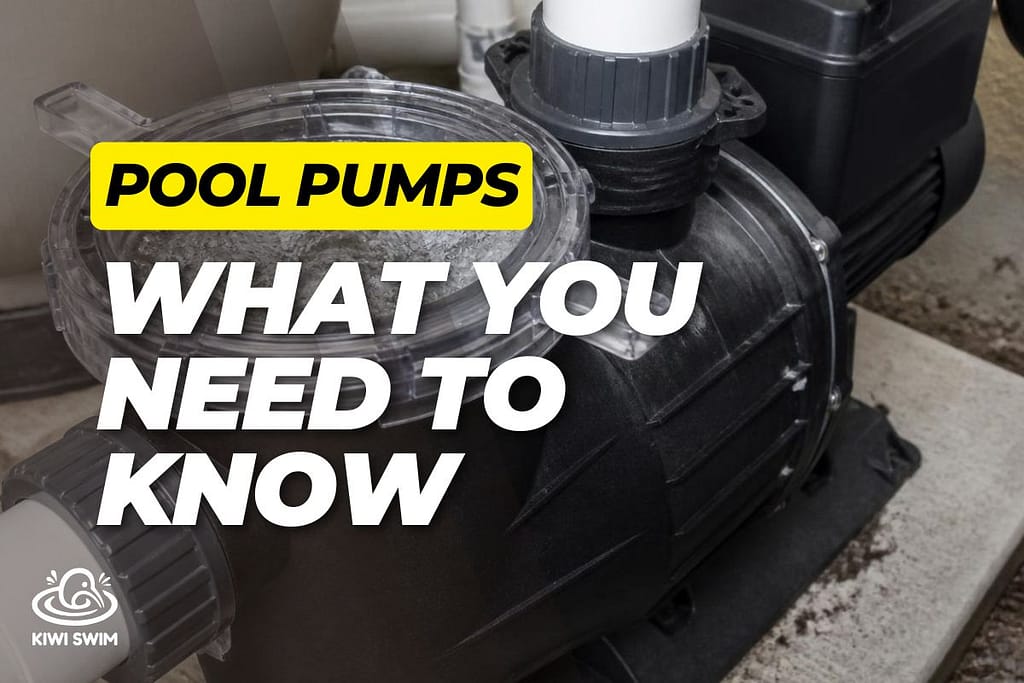
A pool pump is the heart of your swimming pool circulation system. It pulls water from the pool, pushes it through the filter and other equipment, then returns the clean, treated water to the pool.
Choosing the right pump isn’t simply a matter of buying the biggest motor you can afford. The pump needs to work properly with your pool volume, pipework, filter, cleaner, heater, chlorinator and any other equipment in the circulation system.
For many New Zealand pool owners, the best choice today will be an appropriately sized variable speed pool pump, particularly if the pump will run for many hours each day. However, a good single-speed pump can still be perfectly suitable for some pools.
Here’s what you need to know before buying, replacing or troubleshooting a pool pump.
What does a pool pump do?
The basic job of a swimming pool pump is to circulate water continuously through the pool’s filtration and treatment system.
A typical circulation system works roughly like this:
- Water leaves the pool through the skimmer and other suction points.
- The pump draws the water through its strainer basket.
- The pump pushes the water through the pool filter.
- Water passes through other equipment, such as a salt chlorinator, heater or chemical dosing equipment.
- Clean, treated water returns to the pool through the return jets.
The pump doesn’t actually clean the water by itself. Its job is to move the water so that the filter and sanitising equipment can do their jobs.
This is why pump selection matters. A pump that is too small may not provide enough flow for the equipment connected to it. A pump that is unnecessarily large can waste electricity, create excessive flow and potentially cause problems with equipment that isn’t designed for that flow rate.
Pool pump and filter: Why they need to match
Your pool pump and filter should be considered as a pair rather than as completely separate pieces of equipment.
The pump determines how much water you’re trying to push through the system, while the filter has a maximum flow rate that it can handle effectively.
If you install a much larger pump without checking the filter and plumbing, you can end up with excessive flow through the filter. There’s also little benefit in paying for a powerful pump if the rest of the circulation system can’t make useful use of that capacity.
When replacing a pump, check:
- Filter type and model
- Filter manufacturer’s recommended flow rate
- Existing pipe diameter
- Approximate pipe lengths
- Number of bends and fittings
- Pool volume
- Pool cleaner requirements
- Pool heater requirements
- Water features
- Spa jets, if applicable
- Salt chlorinator requirements
- Available electrical supply
This is one reason I wouldn’t recommend choosing a pump based solely on horsepower.
How powerful does a pool pump need to be?
There isn’t one pump size that is right for every pool of a particular volume.
Pool size is important, but flow and resistance are equally important. A pump has to overcome the resistance created by the pipework, filter, fittings and other equipment. This is commonly referred to as head or total dynamic head.
A pump might have an impressive maximum flow rate on its specification sheet, but that doesn’t mean it will deliver that flow once connected to your actual pool system.
As a general starting point, manufacturers may provide pool-volume guidelines for particular pump ranges. For example, Davey’s New Zealand range includes models intended for everything from small above-ground pools through to pools of 90,000 litres, 130,000 litres and beyond, depending on the model and application.
The important point is that the manufacturer’s recommended application and the actual system flow requirements matter more than simply matching horsepower to pool volume.
Don’t automatically buy the biggest pump
A common mistake is assuming that a bigger pump will make the pool cleaner.
It doesn’t necessarily work that way.
A larger pump can:
- Consume more electricity
- Push excessive flow through the filter
- Increase operating noise
- Place greater demands on plumbing and equipment
- Cost more to purchase
- Be unnecessarily powerful for normal filtration
A properly sized pump running efficiently is usually a better solution than an oversized pump running at full speed.
Single-speed vs variable speed pool pumps
One of the biggest decisions when replacing a pump is whether to choose a conventional single-speed model or a variable speed pool pump.
| Pump type | Advantages | Disadvantages | Best suited to |
|---|---|---|---|
| Single speed | Simple, generally lower purchase price, straightforward operation | Always operates at the same speed and power | Smaller or straightforward systems where simplicity is the priority |
| Variable speed | Lower-speed filtration, quieter operation, flexible flow and potentially much lower running costs | Higher upfront cost and more settings to understand | Pools that run frequently, larger systems and owners wanting greater efficiency |
A single-speed pump operates at one speed whenever it is running.
A variable speed pump allows you to reduce or increase the motor speed according to what the pool is doing. You can run it slowly for normal filtration and increase the speed when higher flow is required, such as for certain cleaners, heating systems or other equipment.
Manufacturers such as Davey and AstralPool now offer variable speed models in New Zealand, with programmable controls and, on some models, Bluetooth or app connectivity.
Why variable speed pumps can save electricity
A variable speed pump doesn’t need to operate at maximum speed all the time.
For example, your pool may need relatively modest flow for ordinary filtration, but considerably more flow for a particular piece of equipment.
Rather than running a single-speed pump at high power for the entire filtration period, a variable speed system can operate more slowly for longer periods and increase speed when required.
AstralPool describes this approach as allowing the pump speed to be tailored to the requirements of filtration and other pool equipment.
The exact electricity savings will depend on the pump, operating schedule, pool system and electricity price, so I wouldn’t rely on a generic dollar-saving claim when comparing pumps.
What is a pool pump timer?
A pool pump timer controls when your pump operates.
With a basic system, you might programme the pump to run during particular periods of the day. More advanced variable speed pumps can have multiple programmed speeds and schedules.
This is useful because your pump doesn’t necessarily need to run at maximum speed whenever it is switched on.
Your operating schedule should take into account:
- Pool usage
- Water temperature
- Sanitiser production
- Filtration requirements
- Pool cleaner operation
- Heating
- Weather
- Seasonal conditions
For a salt-water pool, the pump also needs to run when the salt chlorinator is operating because the chlorinator relies on water flow.
Don’t assume that copying somebody else’s pump schedule will produce the same result in your pool. The correct schedule depends on the entire circulation and sanitising system.
Above ground pool pumps
An above ground pool pump can be considerably smaller than the pump required for a large permanent in-ground pool.
Small pools may use compact pump and filter systems designed specifically for them. Davey’s New Zealand range, for example, includes a Whisper model specifically intended for small and above-ground pools.
You’ll also come across brands such as Intex pool pump and Bestway pool pump systems, particularly with smaller above-ground pools.
When replacing one of these systems, don’t assume that any standard pool pump will be a direct replacement. Check:
- Hose or pipe size
- Connection type
- Filter compatibility
- Required flow
- Electrical connection
- Physical dimensions
- Manufacturer recommendations
Small above-ground systems can have completely different connections from conventional permanently plumbed pool equipment.
Pool pumps for inground pools
Pool pumps for inground pools generally need to be selected as part of the complete circulation system.
An in-ground pool may have longer pipe runs, larger filters and additional equipment such as:
- Automatic cleaners
- Heat pumps
- Solar heating
- Water features
- Salt chlorinators
- In-floor cleaning
- Spa connections
This makes pump selection more complicated than simply calculating the pool’s litres.
For example, Davey’s PowerMaster range is designed for both above-ground and in-ground applications, with models covering pools up to 170,000 litres and applications including heating and in-floor cleaning.
That doesn’t mean one of those pumps is automatically suitable for every 170,000-litre pool. The actual system requirements still need to be checked.
What about Hayward and Pentair pool pumps?
Hayward pool pump and Pentair pool pump are two well-known international pool equipment brands, and you’ll encounter their equipment in some pool systems.
If you’re replacing an existing pump from either manufacturer, don’t automatically assume you need the same horsepower.
Instead, identify the existing pump’s:
- Model
- Flow characteristics
- Motor power
- Plumbing connections
- Electrical requirements
- Filter
- Cleaner and other equipment
If you’re changing brands, check whether the replacement is genuinely compatible with the existing system.
A reputable pool supplier or technician should be able to help you compare the pump’s performance curve rather than simply matching the horsepower number.
What should you look for when buying a pool pump?
Before buying a replacement pump, I’d work through the following checklist.
1. Know your pool volume
Calculate the approximate number of litres in the pool.
This gives you a starting point, but it shouldn’t be the only factor used to select the pump.
2. Check the filter
Find the make and model of your filter and check its recommended flow rate.
A new pump shouldn’t simply be selected independently of the filter.
3. Check the existing plumbing
Look at the pipe sizes and connections.
A pump that is technically capable of moving a large amount of water won’t necessarily perform as expected if the existing plumbing restricts flow.
4. Consider everything connected to the system
Think beyond ordinary filtration.
Does your pool have:
- A heat pump?
- Solar heating?
- An automatic cleaner?
- A salt chlorinator?
- Water features?
- Spa jets?
- An in-floor cleaning system?
These can change the flow requirements.
5. Consider running costs
If the pump will operate for many hours every day, electricity consumption deserves serious consideration.
A cheaper pump isn’t necessarily cheaper over its entire service life. This is just one aspect of all the combined pool costs to consider.
6. Consider noise
Pump location matters, particularly in smaller Auckland properties where equipment may be close to bedrooms, living areas or neighbours.
Some modern pumps are specifically designed for quiet operation. Davey’s Silensor, for example, uses a water-cooled motor design and is marketed for quiet residential operation.
7. Check replacement parts and support
A pump is something you’ll hopefully own for several years.
Before buying, consider whether replacement baskets, seals, lids, motors and other parts are readily available in New Zealand.
Common pool pump problems
A pump can appear to be working while the pool circulation is still inadequate.
Here are some common problems.
The pump won’t start
Possible causes include:
- No power
- Tripped circuit breaker
- Timer or controller issue
- Motor fault
- Electrical fault
Don’t open electrical components unless you’re appropriately qualified to do so.
The pump is running but there is little flow
Check the simple things first:
- Is the skimmer basket blocked?
- Is the pump basket full of debris?
- Is the filter dirty?
- Is the water level too low?
- Is there air entering the suction side?
- Are valves correctly positioned?
- Is the cleaner restricting flow?
- Has the system lost its prime?
If the pump repeatedly loses prime, there may be a suction-side air leak or another plumbing problem that needs investigation.
The pump is noisy
Some pump noise is normal, but a noticeable change in sound can indicate a problem.
Possible causes include:
- Debris
- Worn bearings
- Cavitation
- Air entering the system
- A damaged impeller
- Vibration
- Incorrect installation
Don’t ignore a pump that suddenly becomes much louder than it used to be.
The pump is leaking
Water around the pump can indicate a failed seal, damaged housing, loose connection or plumbing problem.
If water is getting near electrical components, switch the system off and have it assessed rather than continuing to operate it.
Common mistakes pool owners make
Choosing by horsepower alone
Horsepower doesn’t tell you everything about how a pump will perform in a particular plumbing system.
Look at flow, head, efficiency and compatibility with the rest of the equipment.
Installing an oversized pump
Bigger isn’t automatically better.
The filter and plumbing need to be capable of handling the flow.
Ignoring the filter
Replacing a pump without checking the filter is a common way to create an unbalanced system.
Running a single-speed pump unnecessarily hard
If your pool system can benefit from variable speed operation, running a large single-speed pump for long periods can be an expensive way to circulate water.
Neglecting the pump basket
Leaves and debris eventually restrict flow.
Regularly checking and cleaning the pump basket is simple maintenance that can help keep the system operating properly.
Letting the pump run dry
A pool pump needs water for proper operation. Running it without adequate water flow can damage components.
If the pump repeatedly loses prime, investigate the cause rather than simply restarting it over and over.
When to call a professional
There are several things a pool owner can safely handle themselves, including checking baskets, cleaning accessible debris and monitoring basic pump operation.
Electrical work is different.
Pool and spa equipment is specifically covered by New Zealand’s electrical product safety framework, and fixed electrical work must comply with the applicable New Zealand electrical requirements.
If you’re installing a permanently connected pump, modifying electrical wiring, changing circuits or dealing with an electrical fault, use an appropriately licensed electrical worker where required. WorkSafe advises consumers to use licensed workers for electrical work when they don’t have the necessary skills and knowledge.
For a new pump installation, it’s also sensible to have the electrical requirements checked before purchasing the equipment. You don’t want to discover afterwards that the existing electrical supply isn’t suitable.
Frequently Asked Questions
How long should a pool pump run each day?
There isn’t one universal running time. It depends on pool size, pump flow, filtration, sanitising equipment, water temperature, pool usage and the season.
The goal is to achieve adequate circulation and filtration without wasting energy.
Is a variable speed pool pump worth it?
For many residential pools, it can be.
The ability to run at lower speeds for ordinary filtration and increase the speed when required can reduce energy use and noise. The benefit is greatest when the pump operates frequently over many years.
Can I use a bigger pool pump than recommended?
You shouldn’t simply install a larger pump without checking the filter, plumbing and other equipment.
An oversized pump can increase electricity consumption and may create excessive flow through parts of the circulation system.
What size pool pump do I need for my pool?
Pool volume is only part of the calculation. The filter, pipework, equipment, required flow and total system resistance also need to be considered.
Use the pump manufacturer’s performance information and the specifications of your existing equipment rather than choosing purely by horsepower.
How often should I clean the pool pump basket?
Check it regularly, particularly during periods when leaves and other debris are entering the pool.
The exact frequency depends on your pool and surroundings. A pool surrounded by trees may need much more frequent cleaning than a pool with little nearby vegetation.
Should my pool pump run when the salt chlorinator is operating?
Yes. A salt chlorinator requires water circulation to operate correctly. The pump and chlorinator need to be configured so that chlorination only occurs when adequate water flow is available.
Choosing the right pool pump
The best pool pump isn’t necessarily the most powerful or the cheapest model.
You want a pump that is correctly matched to the pool, filter, plumbing and other equipment, while providing the flow you actually need.
For a straightforward small pool, a conventional single-speed pump may be all you need. For a residential pool that runs regularly, a variable speed model is often worth considering because it gives you much greater control over flow, operating hours and energy use.
Before buying, identify your pool volume, filter, existing plumbing, connected equipment and electrical requirements. Then compare pumps based on their actual performance and suitability rather than simply looking at horsepower.
Get that combination right and the pump should quietly do its job in the background: circulate the water, keep the filtration system working and help your pool stay clean and properly maintained.