Knowing how to clean a pool properly is about more than removing leaves and making the water look clear. A clean swimming pool needs regular physical cleaning, good filtration and circulation, and correctly balanced water.
The good news is that you don’t need to be a pool professional to keep a residential pool clean. Once you understand what each part of the cleaning process does, routine pool maintenance becomes much more straightforward.
For most pools, your regular routine should include skimming the surface, emptying baskets, brushing the walls and floor, vacuuming, checking the filter and testing the water. How often you need to do each job depends on the pool, surrounding trees and gardens, weather, bather load and type of filtration system.
This guide explains how to clean a pool from top to bottom, including how to vacuum a pool, how to vacuum a pool with a sand filter, which pool cleaning equipment you’ll need and how swimming pool cleaning chemicals fit into the process.
How often should you clean a swimming pool?
A pool doesn’t necessarily need a full clean every day, but some maintenance should be done regularly.
As a general starting point:
| Pool cleaning task | Typical frequency |
|---|---|
| Skim leaves and debris | Several times a week or as needed |
| Empty skimmer and pump baskets | Weekly, or more often when debris is heavy |
| Brush walls and floor | Weekly |
| Vacuum the pool | Weekly or as required |
| Test pool water | At least weekly |
| Check filter pressure | Weekly |
| Clean/backwash filter | When required by the filter and pressure reading |
| Inspect equipment | Regularly |
Pools surrounded by trees, exposed to wind or used heavily may need considerably more attention.
After storms or periods of heavy rain, for example, you may find leaves, dirt and organic material entering the pool much faster than normal.
The important thing is not to become obsessed with a particular schedule. Look at the pool and the equipment and respond to what you see.
What you need to clean a pool
You don’t need a huge collection of equipment to clean a residential swimming pool.
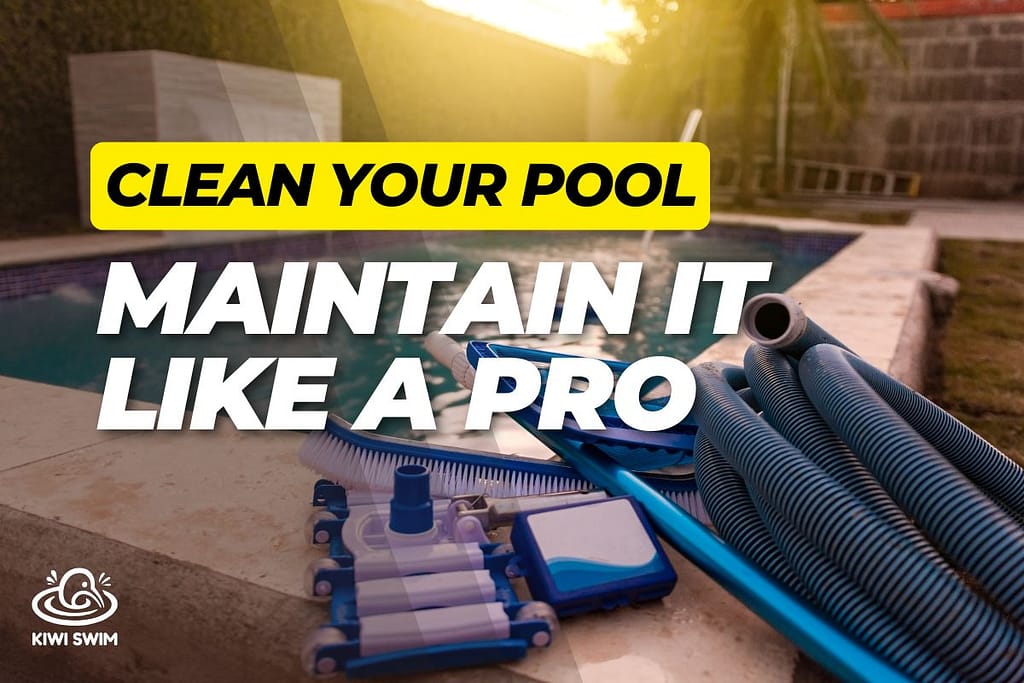
The basic pool cleaning equipment I’d recommend includes:
- Telescopic pool pole
- Pool skimmer net
- Pool brush
- Manual pool vacuum head
- Vacuum hose
- Vacuum plate, where required by your skimmer system
- Water test kit or test strips
- Appropriate pool chemicals
- Filter system
- Clean skimmer and pump baskets
A leaf scoop is particularly useful if you have a lot of leaves entering the pool.
An automatic or robotic cleaner can also reduce the amount of manual vacuuming required, but it doesn’t completely replace other maintenance. You still need to skim the surface, empty baskets, brush areas the cleaner misses and look after the water chemistry.
How to clean a pool step by step
If you’re new to pool maintenance, this is the basic process I’d follow.
1. Remove leaves and large debris
Start by skimming the surface with your leaf net.
Remove leaves, insects, twigs and other visible debris before you start vacuuming or brushing.
This matters because large amounts of organic material can consume chlorine as it breaks down. Leaves can also sink to the bottom and become much harder to remove.
If there is a significant amount of debris on the floor, use a leaf scoop rather than trying to vacuum everything through the filtration system.
2. Empty the skimmer and pump baskets
Check the skimmer basket and remove anything that has collected inside it.
It’s also worth checking the pump basket if your pool has one.
A blocked basket restricts water flow and can reduce the effectiveness of your circulation and filtration system. In severe cases, it can contribute to pump problems.
Always follow the manufacturer’s instructions when opening or servicing pool equipment.
3. Brush the pool walls and floor
Use your pool brush to scrub the walls, steps, corners and floor.
Pay particular attention to areas where dirt tends to accumulate, including:
- Steps
- Corners
- Around return fittings
- Behind ladders
- Along the waterline
- Areas with poor circulation
Brushing loosens dirt and microscopic debris so that the filtration system or vacuum can remove it.
It’s also an important part of preventing algae from establishing itself on pool surfaces.
If you’re brushing algae from a pool, don’t simply brush it and assume the problem is solved. You’ll also need to address the underlying water chemistry and filtration.
4. Vacuum the pool
Once you’ve brushed the pool, vacuum the debris from the floor.
This can be done manually or with an automatic pool cleaner or robotic cleaner.
For a manual vacuum, connect the vacuum head to your telescopic pole and attach the vacuum hose. The exact connection procedure varies between pool and skimmer systems, so follow the equipment manufacturer’s instructions.
Move the vacuum head slowly across the pool floor rather than rushing back and forth.
If you move too quickly, you can stir up fine dirt instead of removing it.
How to vacuum a pool
Manual vacuuming is fairly simple once you’ve done it a few times.
The basic process is:
- Assemble the vacuum head, pole and hose.
- Fill the vacuum hose with water so you don’t introduce a large pocket of air into the circulation system.
- Connect the hose to the appropriate suction point according to your pool system.
- Start the pump if required by your system.
- Move the vacuum head slowly across the pool floor.
- Watch the filter pressure and water flow while vacuuming.
- When finished, disconnect the equipment and return the valves to their normal operating position.
The exact procedure depends on whether your pool uses a sand filter, cartridge filter or another filtration system.
Don’t change multiport valve positions while the pump is running. Turn the pump off before changing the valve position.
How to vacuum a pool with a sand filter
Sand filters are common on residential pools in New Zealand.
When vacuuming a pool with a sand filter, you generally have two main options: vacuuming through the filter or vacuuming directly to waste.
Vacuuming through the filter
For routine cleaning when the pool isn’t particularly dirty, you can normally vacuum through the sand filter.
The debris is captured by the filter media and the water returns to the pool.
As dirt accumulates, the pressure inside the filter can rise. When the filter reaches the pressure level specified by the manufacturer for cleaning, the filter should be backwashed according to its instructions.
Vacuuming to waste
If you’re dealing with a very dirty pool, large amounts of sediment or a serious algae clean-up, sending the debris directly to waste can sometimes be preferable.
This prevents a large amount of dirt from being pushed into the filter.
However, vacuuming to waste removes pool water, so keep an eye on the water level. You also need to make sure the waste discharge is suitable for your property and complies with any relevant local requirements.
The correct valve configuration varies between equipment installations, so use the instructions for your particular multiport valve and filtration system.
Should you vacuum before or after brushing?
For normal maintenance, brush first and vacuum afterwards.
Brushing loosens dirt and debris from the pool surfaces. Vacuuming afterwards gives you an opportunity to remove the material you’ve disturbed.
If you vacuum first and then brush, some of that debris will simply settle back onto the floor.
For an exceptionally dirty pool, the process can be more involved, particularly if you’re dealing with algae or heavy sediment.
How to keep pool water clean
Physical cleaning is only half the job.
You also need to maintain the water itself.
The main things to keep under control are:
- Chlorine or another appropriate sanitiser
- pH
- Total alkalinity
- Calcium hardness where relevant
- Cyanuric acid in pools using stabilised chlorine
- Water level
- Filtration and circulation
The appropriate target ranges depend on the pool and treatment system. For domestic pool owners, it’s sensible to follow the requirements of your equipment and chemical manufacturers and use NZ guidance such as NZS 5826:2010 where applicable. New Zealand health guidance references this standard for pool water quality and maintenance.
Testing the water regularly is much better than waiting until the pool turns green or cloudy.
A pool can look perfectly clear while its chemistry is drifting out of balance.
Swimming pool cleaning chemicals
Chemicals aren’t really a substitute for cleaning. They’re part of maintaining the water after you’ve physically removed dirt and debris.
Common swimming pool cleaning chemicals include:
- Chlorine
- Hydrochloric acid
- Sodium bicarbonate
- Cyanuric acid
- Calcium hardness products
- Other products designed for specific water-treatment problems
The exact chemicals you need depend on your pool’s sanitising system and water test results.
For example, adding acid because the pool “usually needs acid” isn’t a good approach. Test the water first, determine what needs correcting and follow the product instructions.
Never mix pool chemicals
This is particularly important.
Never mix pool chemicals together unless the manufacturer specifically instructs you to do so.
Keep chemicals in their original containers, store them according to the manufacturer’s instructions and avoid contaminating one chemical with another.
If you’re unsure about a chemical treatment, ask a pool professional rather than experimenting.
Don’t rely on chlorine to do all the cleaning
This is one of the biggest misunderstandings I see with pool maintenance.
Chlorine sanitises the water, but it doesn’t magically remove leaves, dirt and other debris.
A pool can have plenty of chlorine and still have:
- Dirty walls
- Leaves on the floor
- Blocked baskets
- A dirty filter
- Poor circulation
- Waterline buildup
Think of the pool as a system.
Cleaning removes physical debris. Filtration removes suspended particles. Circulation moves the water. Chemicals control water quality and microorganisms.
All four work together.
How to clean a cloudy or dirty pool
If your pool is cloudy, don’t immediately throw a collection of chemicals into it.
First work out what’s causing the problem.
Check:
- Water chemistry
- Chlorine level
- pH
- Filter pressure
- Filter condition
- Pump operation
- Water circulation
- Skimmer and pump baskets
- Pool surfaces for algae
- Recent rain or heavy pool use
A dirty or overloaded filter can contribute to cloudy water. So can inadequate circulation, poor water chemistry and algae.
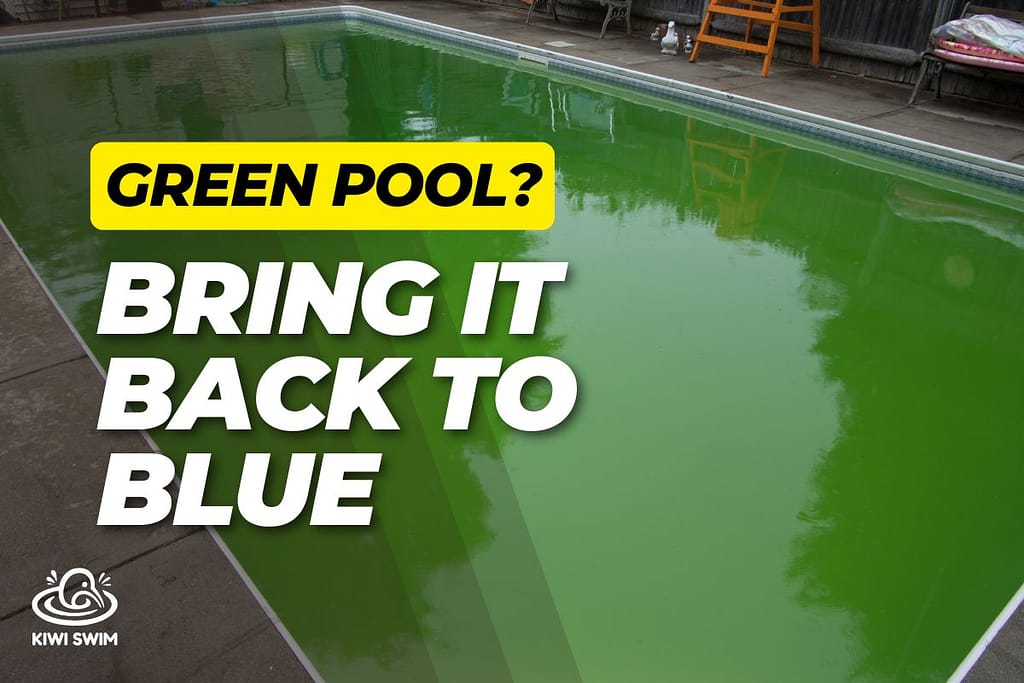
If the pool has turned green, that’s a different situation from simply having some dirt on the bottom. You may need a more intensive clean involving brushing, filtration, water testing and appropriate sanitising treatment.
How to clean the waterline
The waterline is often one of the dirtiest-looking areas of a swimming pool.
Oils, sunscreen, dust and other contaminants can accumulate where the water meets the pool surface.
Use a suitable pool surface cleaner or cleaning product designed for your particular pool finish.
Be careful with abrasive cleaning methods. What is suitable for a concrete or tiled pool may not be appropriate for a vinyl-lined pool or another delicate surface.
If the waterline becomes dirty very quickly, look at the underlying cause rather than simply scrubbing it more often.
Common pool cleaning mistakes
Vacuuming too quickly
Slow, controlled movements are much more effective.
Move too fast and fine dirt can be stirred into the water rather than collected.
Ignoring the filter
A pool can be cleaned beautifully but still become cloudy if the filtration system isn’t operating properly.
Check filter pressure and maintain the filter according to the manufacturer’s instructions.
Waiting until the pool looks dirty
Regular small maintenance jobs are much easier than trying to recover a neglected pool.
This is particularly true during warm weather when algae can become established quickly.
Adding chemicals without testing
Guessing at chemical doses can create another problem while you’re trying to fix the first one.
Test the water and make adjustments based on the results.
Forgetting the baskets
A blocked skimmer or pump basket can restrict circulation and put unnecessary strain on the system.
Emptying the pool unnecessarily
Don’t drain a pool simply because it looks dirty.
New Zealand Building Performance guidance specifically warns that some pools can crack or pop out of the ground if emptied, and recommends checking with the manufacturer or a pool maintenance professional before draining one.
Pool maintenance for beginners
If you’re new to pool ownership, don’t try to learn everything at once.
A simple routine is enough to get started:
Several times a week
- Look at the pool
- Remove leaves and debris
- Check the water level
Weekly
- Test the water
- Brush the pool
- Vacuum if necessary
- Empty baskets
- Check filter pressure
- Inspect the equipment
As required
- Clean or backwash the filter
- Correct water chemistry
- Clean the waterline
- Deal with algae or cloudy water
Your pool may need more frequent attention during summer, after storms or when there are lots of swimmers using it.
When to call a professional pool cleaner
There’s nothing wrong with doing routine pool maintenance yourself. Most owners can safely handle basic skimming, brushing, vacuuming and water testing once they understand their equipment.
A pool cleaning service can make sense if you don’t have the time, you’re away from home regularly, or the pool needs more attention than you’re comfortable handling.
Professional help is particularly worthwhile when you’re dealing with:
- Persistent green or cloudy water
- Repeated water chemistry problems
- Suspected equipment faults
- Pump or filtration problems
- Complex plumbing
- Electrical issues
- Major leaks
- Problems that continue despite correct maintenance
Don’t attempt electrical repairs yourself unless you’re appropriately qualified.
Pool cleaning and safety in New Zealand
Cleaning the pool doesn’t remove your responsibility for pool safety.
Under New Zealand’s residential pool rules, pools capable of containing 400 mm or more of water generally require a physical barrier that restricts access by unsupervised children under five. This includes temporary and inflatable pools.
Residential pool barriers are also subject to mandatory inspections every three years, with some exceptions for small heated pools where a compliant safety cover is used as the barrier.
If you’re installing or modifying a pool or its barrier, check the current requirements with your local council and Building Performance before starting work.
Pool cleaning should never involve bypassing a safety barrier or leaving a pool accessible to children while you’re working.
Frequently Asked Questions
How often should I clean my swimming pool?
For most residential pools, you should skim debris regularly, brush and inspect the pool weekly, and vacuum when needed. Water chemistry should also be tested regularly. Pools exposed to lots of leaves, wind or heavy use may need more frequent cleaning.
What is the best way to clean a pool?
The basic approach is to skim debris, empty baskets, brush the surfaces, vacuum the floor, check the filter and test the water. Keeping the filtration and circulation system working properly is just as important as physically cleaning the pool.
Can I vacuum my pool through a sand filter?
Yes. Routine debris can generally be vacuumed through a sand filter, allowing the filter to capture the dirt. For very dirty pools or heavy sediment, vacuuming to waste may be preferable, depending on the pool and filtration system.
How often should I vacuum my pool?
Many residential pools benefit from weekly vacuuming, but there isn’t a universal schedule. A pool with little debris may need less frequent vacuuming, while a pool surrounded by trees or exposed to heavy debris may need it more often.
Why is my pool still dirty after cleaning?
The problem may not be the physical cleaning itself. Check the filter, pump, circulation, baskets and water chemistry. Poor filtration or circulation can cause dirt and fine particles to remain suspended in the water.
Do I need a professional pool cleaning service?
Not necessarily. Most pool owners can handle routine cleaning themselves. A professional becomes more useful when you don’t have time for regular maintenance or you’re dealing with persistent water quality, filtration, plumbing or equipment problems.
Keeping your pool clean
Learning how to clean a pool properly is mostly about establishing a consistent routine rather than waiting for something to go wrong.
Skim debris, brush the surfaces, vacuum the floor, keep the baskets and filter maintained, and test the water regularly. Don’t rely on chemicals to compensate for poor physical cleaning or inadequate filtration.
Once you understand how your pump, filter and sanitising system work together, pool maintenance for beginners becomes much less intimidating.
The simplest approach is also usually the most effective: remove debris regularly, keep the water balanced, maintain good circulation and deal with small problems before they become big ones.