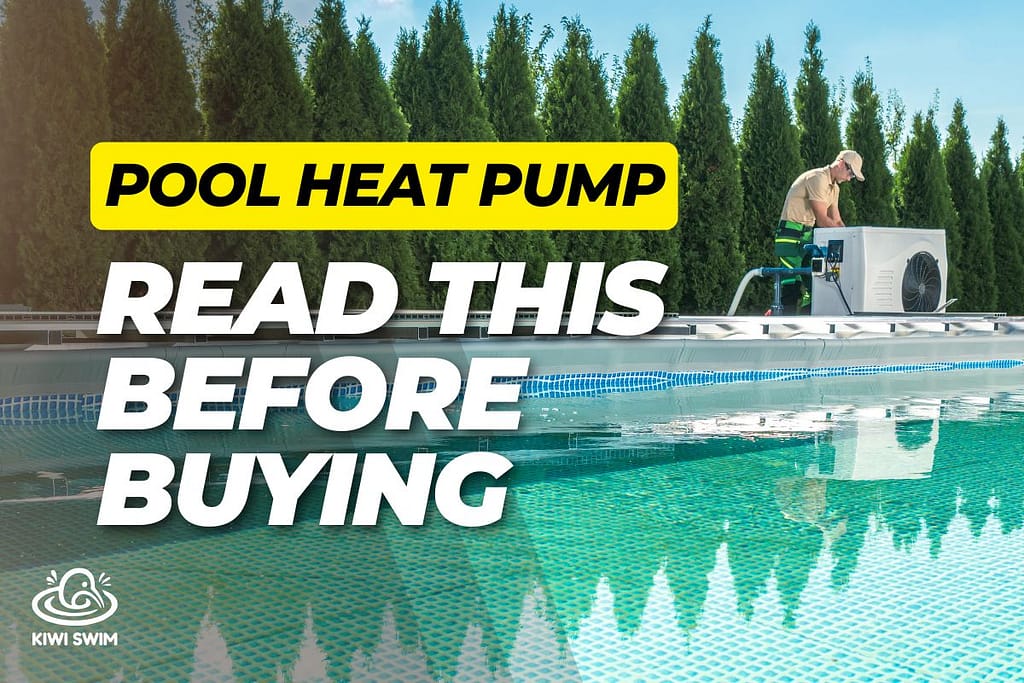
A pool heat pump is one of the most practical ways to extend the swimming season in New Zealand without relying on direct electric heating. Instead of creating heat from electricity, a pool heat pump takes heat from the surrounding air and transfers it into your pool water.
For many NZ pool owners, the biggest question isn’t whether a pool heat pump works. It’s whether it’s the right heating system for their pool, how much electricity it will use, how quickly it can heat the water, and what is involved in installing and running one.
This guide explains how pool heat pumps work, what to look for when choosing one, how they compare with other pool heating options, and the practical issues worth considering before you buy.
What is a pool heat pump?
A pool heat pump is a pool heater that extracts heat from the surrounding air and transfers it into the pool water.
The process is similar to the way a household heat pump works. Rather than using electricity to directly heat water, the electrical energy powers a compressor and refrigeration system that moves existing heat from one place to another.
This is why a heat pump can produce considerably more heat energy than the amount of electrical energy it consumes. The actual performance varies depending on the air temperature, humidity, water temperature, equipment design and operating conditions.
A pool heat pump normally sits beside the pool equipment, in or outside the equipment enclosure, and connects to the existing circulation system. Water is pumped through the heat pump, warmed, and then returned to the pool.
How does a pool heat pump work?
The basic process is relatively straightforward:
- Your pool pump sends water through the filtration system.
- Water passes through the heat pump’s heat exchanger.
- The heat pump extracts heat from the surrounding air.
- A refrigeration circuit transfers that heat to the pool water.
- The warmed water returns to the pool.
- The process continues until the desired water temperature is reached.
The heat pump needs electricity to operate the compressor, fan and controls, but it isn’t electrically heating the water in the same way as a conventional resistance heater.
This makes the amount of heat produced relative to electricity consumed an important consideration when comparing different pool heating systems.
What does COP mean?
You’ll often see pool heat pumps advertised with a COP, or coefficient of performance.
A COP of 5, for example, broadly means the unit can produce five units of heat for every unit of electrical energy consumed under the conditions used for that rating.
However, don’t assume the advertised COP will always be achieved in your backyard. Heat pumps generally perform better when the surrounding air is warmer. Their output and efficiency can fall as air temperatures drop.
This is particularly relevant in New Zealand because the climate changes considerably between regions and seasons.
What to know before buying a pool heat pump
The biggest mistake I see with pool heating is choosing equipment based solely on the advertised price or maximum heating output.
A heat pump needs to be appropriately sized for the pool and the way you intend to use it.
Before buying, consider:
- Pool volume: A larger pool requires considerably more energy to heat.
- Pool location: An exposed pool loses heat much faster than a sheltered one.
- Desired water temperature: The warmer you want the pool, the more energy you’ll generally need.
- When you want to swim: Occasional weekend use is different from maintaining a constant temperature.
- Pool cover: A cover can dramatically reduce heat loss when the pool isn’t being used.
- Local climate: Auckland, Wellington, Christchurch and other parts of NZ have different conditions.
- Available electrical supply: The heat pump must be suitable for the electrical installation.
- Available space: The unit needs adequate airflow around it.
- Noise: The fan and compressor produce some operating noise, which matters if the equipment is close to bedrooms or neighbours.
- Existing pool equipment: The heat pump needs to work properly with your pump, filter and plumbing arrangement.
A good installer should look at the whole pool system rather than simply recommending a heat pump based on pool size.
How big should a pool heat pump be?
Heat pump sizing isn’t simply a matter of matching one particular kilowatt rating to a particular pool volume.
The heat required depends on several factors, including pool size, starting water temperature, desired temperature, outdoor temperature, wind exposure, pool construction and whether you use a cover.
For example, two pools with the same volume can have very different heating requirements if one is sheltered and covered while the other is exposed to wind and left uncovered.
You should also distinguish between heating the pool and maintaining the pool temperature.
Getting cold water from a low starting temperature up to a comfortable swimming temperature requires substantially more energy than maintaining an already-warm pool.
For this reason, I wouldn’t choose a heat pump purely from a manufacturer’s generic pool-size recommendation. Ask for the unit’s actual heating output under conditions that are reasonably representative of your intended use.
Pool heat pumps and pool covers
If you’re investing in a pool heat pump, a pool cover should be high on your list of considerations.
A large amount of heat can be lost from the surface of a swimming pool, particularly through evaporation. A cover helps reduce that heat loss when the pool isn’t being used.
This has two major benefits:
- The pool can retain heat for longer.
- The heat pump doesn’t have to work as hard to maintain the temperature.
In practical terms, buying a larger heat pump isn’t necessarily the best solution to excessive heat loss. Reducing the amount of heat your pool loses can be just as important.
If you’re comparing the cost of upgrading the heat pump with the cost of adding or improving a pool cover, look at the whole system rather than treating the heat pump in isolation.
Pool heat pump vs gas heater
A common question is whether a pool heat pump or gas heater is better.
Both can heat a pool, but they work quite differently.
| Heating system | Advantages | Disadvantages | Best suited to |
|---|---|---|---|
| Pool heat pump | Generally efficient, relatively low running costs, good for maintaining temperature | Heating can be slower, performance falls in colder conditions | Regular pool use and extending the swimming season |
| Gas heater | Rapid heating and high heat output | Fuel costs can be significant, requires appropriate gas installation | Fast heating and occasional use |
| Solar pool heating | Very low operating cost once installed | Dependent on sunlight and available roof area, less useful when conditions are poor | Owners wanting low running costs during sunny periods |
| Electric resistance heater | Simple heating principle | Usually expensive to operate for a swimming pool | Smaller applications or specific circumstances |
There isn’t one universally best pool heating system.
If you want to maintain a comfortable pool temperature over a long period, a heat pump can make a lot of sense. If you want to heat a pool very quickly for occasional use, another system may be more appropriate.
What about a pool heat exchanger?
A pool heat exchanger is different from a heat pump.
A heat exchanger transfers heat from an existing heat source into the pool water. The heat source could potentially be a boiler, solar thermal system or another heating system.
The heat exchanger itself isn’t normally creating the heat.
A pool heat pump, on the other hand, contains the equipment required to extract heat from the surrounding air and transfer it into the pool.
The terms can sometimes be confusing because both systems ultimately transfer heat into the pool water.
Are pool heat pumps suitable for above ground pools?
Yes. A pool heat pump can be used with an above ground pool provided the equipment is appropriately sized and the circulation and electrical systems are suitable.
The same basic principles apply as with an inground pool.
However, above ground pools can have different heat-loss characteristics depending on their construction and location. Some are also more exposed to wind and have less thermal mass than larger inground pools.
The plumbing connections and flow requirements also need to be compatible with the particular pool equipment.
Don’t assume that a heat pump advertised for a particular pool volume will automatically be suitable for your above ground pool. Check the manufacturer’s requirements for water flow, installation and electrical supply.
Are pool heat pumps suitable for inground pools?
Yes. Heat pumps are commonly used with inground swimming pools.
Inground pools can vary enormously in size and construction, so correct sizing is particularly important.
An uncovered, exposed pool may need considerably more heating capacity than a similarly sized pool that is covered and sheltered.
If you’re installing a heat pump on an existing inground pool, the installer should also check the existing pump and filtration system. The heat pump needs appropriate water flow, and the plumbing should be arranged so the equipment operates correctly.
Do pool heat pumps work in winter?
They can operate in cooler weather, but their performance depends heavily on the conditions.
Because a pool heat pump extracts heat from the surrounding air, there is less available heat when the air becomes colder. This generally means lower heating output and reduced efficiency compared with warmer conditions.
This doesn’t necessarily make a heat pump unsuitable for winter. It simply means expectations need to be realistic.
For many NZ pool owners, a heat pump is particularly useful for extending the swimming season through spring and autumn rather than trying to maintain a tropical swimming temperature throughout the coldest part of winter.
The climate where you live also matters. A system that performs very well in a mild northern climate may have a different operating profile in a colder southern region.
How much electricity does a pool heat pump use?
There isn’t one reliable number that applies to every pool heat pump.
Electricity consumption depends on:
- The size and efficiency of the heat pump
- Pool volume
- Starting water temperature
- Target water temperature
- Outdoor temperature
- Wind exposure
- Pool cover use
- How long the heat pump runs
- How often the pool is used
- The amount of heat the pool loses
This is why simply looking at the electrical input rating doesn’t tell you the whole story.
When comparing models, look at the heating output and efficiency under comparable operating conditions, rather than choosing the unit with the lowest electrical input.
Where should a pool heat pump be installed?
The location of the heat pump matters more than many people realise.
The unit needs good airflow because it is taking heat from the surrounding air. Restricting the airflow around the unit can reduce performance and may cause operating problems.
The installation area should also allow appropriate access for maintenance.
Think about:
- Airflow around the unit
- Distance from walls and other obstructions
- Drainage of condensation
- Noise
- Access for servicing
- Proximity to the pool equipment
- Electrical requirements
- Plumbing layout
Avoid simply squeezing the heat pump into the smallest available corner.
If the unit is installed where air circulation is restricted, it can undermine the performance you’re paying for.
Electrical installation and safety
Pool heat pumps use mains electricity, so electrical installation isn’t something to improvise.
Electrical work associated with pool equipment needs to comply with New Zealand electrical safety requirements. WorkSafe states that low-voltage electrical installations must be designed and installed to be safe, and New Zealand electrical workers currently have specific requirements regarding the applicable version of AS/NZS 3000 during the transition period through 2026.
Use a suitably qualified electrician for electrical work and follow the heat pump manufacturer’s installation instructions.
Don’t assume an existing outdoor power circuit is automatically suitable for a new heat pump. The electrician needs to assess the installation, including the electrical load and protection requirements.
Does installing a pool heat pump require building consent in NZ?
Don’t assume that installing a pool heat pump automatically requires a building consent simply because it is associated with a swimming pool.
Building consent requirements depend on the work being undertaken. New Zealand’s Building Performance guidance explains that building work must comply with the Building Code and that consent requirements depend on the specific work.
The pool itself and its barrier have separate requirements. Residential pool barriers are particularly important because pools capable of holding 400 mm or more of water generally require a compliant physical barrier restricting access by young children.
If the heat pump installation involves additional building, structural, plumbing or other work, check the requirements with your local council and the relevant qualified tradesperson before starting.
Pool heat pump maintenance
Heat pumps don’t require the same level of day-to-day attention as your pool water, but they aren’t maintenance-free.
Keep the area around the unit clear and inspect it periodically for obvious problems.
You should also continue to maintain the pool itself properly. Poor water chemistry can cause problems for pool equipment, including heat exchangers and other components that come into contact with the water.
Good pool maintenance includes:
- Keeping pH within the appropriate range
- Maintaining appropriate sanitiser levels
- Keeping the filter clean
- Maintaining adequate water flow
- Cleaning the pool regularly
- Following the manufacturer’s maintenance instructions
If the heat pump displays an error code, repeatedly shuts down or isn’t heating as expected, check the manufacturer’s troubleshooting information before assuming the heat pump itself has failed.
Common pool heat pump mistakes
Choosing a unit based only on pool volume
Pool volume matters, but it isn’t the only sizing factor. Climate, exposure, target temperature and heat loss all matter.
Ignoring the pool cover
A heat pump can replace lost heat, but reducing heat loss in the first place is usually a better approach.
Installing the unit somewhere with poor airflow
A heat pump needs air movement to extract heat effectively. Don’t box it into a cramped space.
Expecting instant heating
Heat pumps are generally better suited to efficient heating and temperature maintenance than behaving like a high-output gas heater that rapidly heats a cold pool.
Looking only at the advertised COP
COP figures are useful, but they are based on particular operating conditions. Compare performance at conditions relevant to your pool rather than treating one headline number as a guarantee.
Buying the cheapest heat pump available
The purchase price is only one part of the ownership cost. Consider efficiency, heating output, warranty, installation requirements, availability of parts and local service support.
When should you call a professional?
There are parts of choosing and installing a pool heat pump that are reasonable for a capable pool owner to research and manage.
For example, you can compare heat pump specifications, calculate your pool volume, consider your desired swimming temperature and assess whether a pool cover would be worthwhile.
Professional help is appropriate for the actual electrical installation and for complex plumbing or equipment modifications.
I’d also recommend getting professional advice if you’re unsure about heat pump sizing. A unit that is too small can leave you disappointed with heating performance, while simply buying a much larger unit isn’t always the most sensible solution.
Frequently Asked Questions
Are pool heat pumps expensive to run?
Running costs depend on the heat pump, pool size, weather, target temperature, operating hours and heat loss. A well-sized heat pump can be considerably more efficient than direct electric heating because it transfers heat rather than generating all of it electrically.
How long does a pool heat pump take to heat a pool?
There is no single answer. Heating time depends on the pool volume, heat pump output, starting temperature, target temperature and heat loss. A pool cover can also make a significant difference.
Can I use a pool heat pump with my existing pool pump?
Often, yes. However, the heat pump has specific water-flow requirements, so your existing circulation system needs to be checked against the manufacturer’s specifications.
Can a heat pump heat an above ground pool?
Yes. Pool heat pumps can be suitable for above ground pools as long as the heat pump, circulation system and electrical installation are compatible.
Is a pool heat pump better than a gas heater?
It depends on how you use the pool. Heat pumps are generally attractive for efficient ongoing heating, while gas heaters can provide rapid heating and high heat output. Your climate, usage pattern and running costs should all be considered.
Should I run my pool heat pump continuously?
Not necessarily. The best operating schedule depends on your pool, cover, target temperature, electricity costs and heat pump controls. Many owners get better results by using the heat pump to maintain a sensible temperature rather than repeatedly heating a cold pool from scratch.
Is a pool heat pump worth it?
For many New Zealand pool owners, a pool heat pump can be an excellent way to extend the swimming season and make the pool more usable.
The key is to look at the whole heating system rather than the heat pump alone. Correct sizing, sensible temperature settings, good water circulation and a suitable pool cover can all have a major effect on the result.
If you’re comparing a pool heat pump NZ option with gas, solar or another pool heater, don’t simply choose the unit with the biggest heating output or lowest purchase price. Consider how you actually use the pool, your local climate, expected running costs, installation requirements and how much heat the pool loses.
A properly selected and installed pool heat pump can provide efficient, controllable heating for both above ground and inground pools, but the right system is the one that matches your pool and your expectations rather than simply being the biggest or cheapest option.