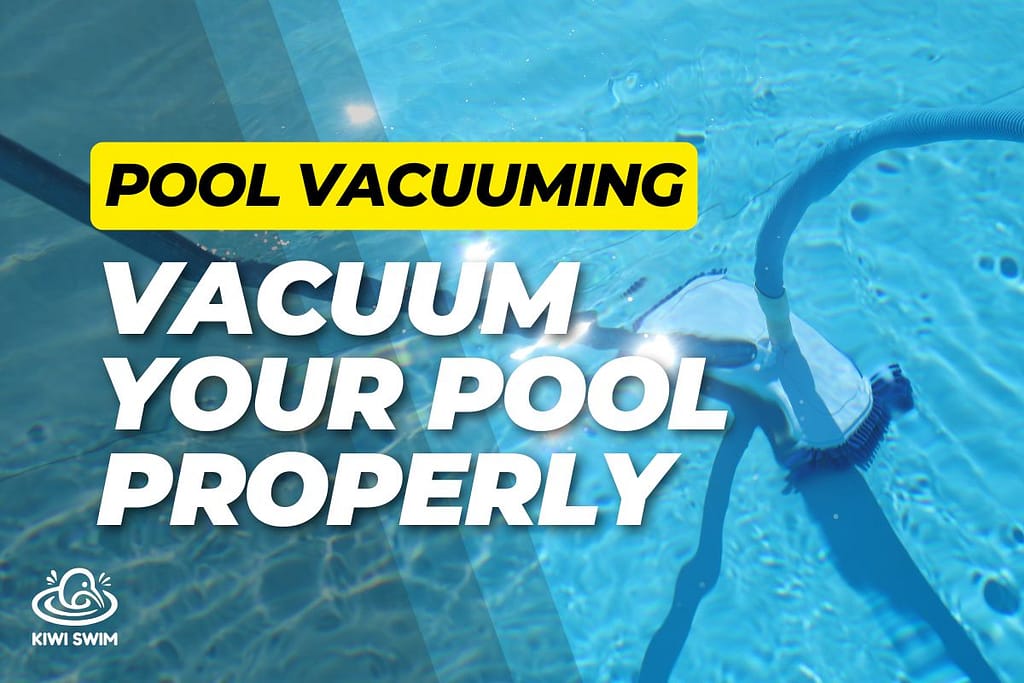
Knowing how to vacuum a pool properly is an essential part of pool maintenance. Even if you have a robotic or automatic cleaner, there are times when manual vacuuming is the quickest and most effective way to remove dirt, leaves, fine sediment or dead algae.
The best method depends on what you’re trying to remove and the equipment your pool has. A small amount of everyday dirt can usually be vacuumed through the filter, while a heavily contaminated pool may be better vacuumed to waste. Portable battery-powered vacuums can also be extremely useful for leaves, steps and quick clean-ups.
Once you understand how your pool’s suction system works, manual vacuuming is relatively simple.
What you need to vacuum a pool
A traditional manual vacuum setup usually consists of:
- A weighted vacuum head
- Telescopic pole
- Flexible vacuum hose
- Skimmer or dedicated vacuum connection
- Pool pump and filter
- Vacuum plate or skimmer plate, depending on your setup
You may also find a leaf strainer useful, particularly if your pool gets a lot of leaves.
Portable battery-powered vacuums are another option. These have their own motor and debris collection bag, so they don’t need to connect to your pool’s filtration system.
How to vacuum a pool manually
For normal pool cleaning, the process is straightforward.
1. Remove large debris first
Use a leaf net to remove large leaves, twigs and other debris from the surface and floor.
If there’s a large amount of debris, don’t try to vacuum all of it through the skimmer. You’ll quickly fill the basket and potentially restrict the pump’s flow.
A leaf strainer can also be used in the vacuum hose to catch larger debris before it reaches the skimmer or pump.
2. Attach the vacuum head and hose
Connect the vacuum head to your telescopic pole and attach the vacuum hose securely.
Make sure the hose is long enough to reach all areas of the pool from the connection point.
3. Fill the hose with water
This is one of the most important steps.
The vacuum hose needs to be completely full of water before you connect it to the suction system. If there’s air trapped inside, you’ll have poor suction and may introduce air into the pump.
Lower the vacuum head into the pool and hold the open end of the hose underwater. You can also hold it over a return jet to push water through the hose.
Once the hose is full of water, connect it to the skimmer or dedicated vacuum line.
4. Set the pump and filter correctly
For normal vacuuming, your filtration system will generally be set to Filter.
If you’re dealing with a large amount of dirt, fine sediment or dead algae, Waste may be a better option if your system has that setting.
Always turn the pump off before changing the position of a multiport valve.
5. Vacuum slowly
Move the vacuum head slowly across the pool floor using overlapping passes.
Think of it like mowing a lawn. Work methodically from one end to the other rather than moving randomly around the pool.
Moving too quickly can stir fine dirt back into the water instead of picking it up.
Vacuuming to Filter vs Waste
One of the most important things to understand is the difference between vacuuming through your filter and vacuuming directly to waste.
Vacuuming on Filter
When the system is set to Filter, water from the vacuum passes through the filter before returning to the pool.
This is normally the best option for:
- Routine weekly vacuuming
- Small amounts of dirt
- Fine everyday debris
- Light leaf debris
- General pool maintenance
The advantage is that you don’t lose pool water.
The downside is that all the dirt you’re removing is being collected by the filter. A heavily dirty pool can therefore load the filter quite quickly.
Vacuuming to Waste
When the system is set to Waste, the water bypasses the filter and is discharged through the waste line.
This is particularly useful for:
- Heavy dirt
- Fine sediment
- Dead algae
- Very dirty pools
- Material that has settled on the bottom after certain treatments
The advantage is that you’re removing the unwanted material completely rather than sending it through the filter.
The downside is that you’re also losing pool water.
Keep an eye on the water level when vacuuming to waste. If it falls too low, the skimmer can begin drawing air and the pump may lose prime.
For a normal weekly clean, there’s usually no reason to waste large quantities of pool water just to avoid using the filter.
How to vacuum a pool with a sand filter
Sand and glass media filters are common on residential pools in New Zealand.
If you have a sand filter with a multiport valve, routine vacuuming is generally done with the valve on Filter.
The basic process is:
- Turn the pump off.
- Set the valve to Filter.
- Prime the vacuum hose completely.
- Connect the vacuum to the skimmer or dedicated vacuum line.
- Start the pump.
- Check that you have good suction.
- Vacuum slowly.
- Monitor the filter pressure.
- Backwash when the filter pressure reaches the appropriate level for your system.
If the pool is extremely dirty or contains large amounts of fine algae or sediment, you may instead choose Waste, if available.
After vacuuming through the filter, don’t automatically backwash just because you’ve finished vacuuming. Use your normal clean filter pressure and the manufacturer’s recommended pressure increase as your guide.
Always stop the pump before moving the multiport valve.
How to get more suction when vacuuming
Poor suction is one of the most common problems with manual pool vacuuming.
Before assuming there’s a problem with your pump, check the simple things first.
Make sure the hose is full of water
Air in the hose is a major cause of poor suction.
If you see bubbles coming from the vacuum head or the pump starts sucking air, stop and reprime the hose.
Check the skimmer and pump baskets
A basket packed with leaves can restrict water flow.
Turn the pump off before opening the baskets and clean them out.
Check the vacuum head
Leaves, hair and other debris can become caught around the vacuum head and restrict the opening.
Check the hose
Look for cracks, loose connections, kinks or blockages.
A damaged hose can also allow air into the system, reducing suction.
Direct more suction towards the vacuum
Some pools have separate valves controlling the skimmer, main drain and other suction points.
If your setup allows it, reducing suction through other lines can increase suction through the vacuum.
Only adjust valves you understand and that your system is designed to operate with.
Check the filter
If you’re vacuuming through the filter and the pressure has risen significantly, the filter may be loaded with debris.
A dirty filter restricts water flow, which can reduce vacuum performance.
Vacuum plates and leaf strainers
A vacuum plate, sometimes called a skim vac, sits over the skimmer basket and provides a connection for the vacuum hose.
It’s a convenient setup because the basket remains in place and catches debris before it reaches the pump.
An inline leaf strainer is particularly useful when you’re vacuuming lots of leaves.
It sits in the vacuum hose and collects larger debris before it reaches the skimmer.
These accessories are worth considering if your pool is surrounded by trees or regularly collects large amounts of organic debris.
Just remember to check the basket or strainer during the job. Once it’s packed with debris, it will restrict suction.
Portable battery-powered pool vacuums
Traditional pool vacuum systems rely on the pool pump to create suction, but portable battery-powered vacuums have become increasingly useful for both professional and residential pool cleaning.
These vacuums have their own motor and collect debris in a bag, basket or onboard filtration system, so they don’t need to be connected to the pool’s filtration system.
The main advantages are that they:
- Don’t require a vacuum hose
- Don’t rely on the pool pump
- Don’t require priming
- Can be set up very quickly
- Are useful for awkward-access pools
- Can remove debris without sending it through the pool filter
- Are handy for quick clean-ups and heavy debris
They’re particularly useful for large amounts of leaves, debris on steps and shallow areas, or pools where setting up a conventional vacuum would be inconvenient.
Riptide
Riptide makes professional portable pool vacuum systems designed for pool technicians and demanding cleaning jobs. The range includes systems such as the Riptide SL and Riptide XP.
They’re particularly useful when you’re dealing with large amounts of debris or cleaning multiple pools where saving setup and vacuuming time matters.
For an ordinary homeowner who vacuums occasionally, a conventional vacuum head and hose will generally be much more economical. For someone cleaning pools professionally, the portability and time savings can make a dedicated system worthwhile.
Hammerhead
Hammerhead pool vacuums are another popular option in the professional pool cleaning market. They’re designed as portable commercial-grade vacuum systems that can collect debris independently of the pool’s normal filtration system.
They’re especially useful for:
- Large amounts of leaves and debris
- Cleaning commercial or larger residential pools
- Fast clean-ups between regular maintenance
- Pools with difficult access
- Removing heavy debris without putting it through the pool filter
Hammerhead systems are more of a professional investment than a typical homeowner’s weekly vacuuming solution, but they can save considerable time when used regularly.
Power Vac
Power Vac is another type of portable pool vacuum system designed for removing debris without relying on the pool’s main filtration system.
These systems are useful when you need to remove larger amounts of debris quickly, particularly leaves and other material that you’d rather collect separately instead of sending through the pool filter.
Like Riptide and Hammerhead, Power Vac systems are generally better suited to frequent or demanding cleaning than occasional homeowner use.
Bottom Feeder
The Bottom Feeder is a cordless pool vacuum that uses its own battery and debris collection system rather than relying on the pool pump.
It’s particularly useful for:
- Heavy debris
- Steps and shallow areas
- Difficult-access pools
- Quick clean-ups
- Removing debris without putting it through the pool filter
The cordless design also makes it convenient when you don’t want to run a hose across the pool or spend time setting up a conventional vacuum system.
Which portable vacuum is right for you?
For most homeowners, you don’t need a professional portable vacuum just to keep a reasonably clean pool maintained. A standard vacuum head, hose and vacuum plate can do the job very well.
Portable systems become much more attractive when you’re regularly dealing with heavy debris, difficult-access pools, shallow water, or multiple pools. They’re also useful as a second cleaning method rather than a complete replacement for your normal pool equipment.
There are also smaller rechargeable handheld vacuums designed for spas, steps and smaller pools. These are convenient for spot cleaning but generally aren’t a replacement for a full-size pool vacuum when you need to clean an entire pool.
Which vacuum method should you use?
The best option depends on the situation.
| Situation | Good option |
|---|---|
| Normal weekly dirt | Manual vacuum through Filter |
| Small amount of leaves | Vacuum with a vacuum plate |
| Lots of leaves | Leaf strainer or portable debris vacuum |
| Fine sediment | Vacuum to Waste where available |
| Dead algae after treatment | Vacuum to Waste where available |
| Heavy storm debris | Leaf net or portable vacuum first |
| Steps and small areas | Portable handheld vacuum |
| Regular automated cleaning | Robotic or automatic cleaner |
| Difficult-access pool | Portable battery vacuum |
You don’t need to use the same method every time.
For example, there’s little point sending hundreds or thousands of litres of pool water to waste when you’re simply removing a small amount of dust from the bottom.
On the other hand, sending a large quantity of dead algae through your filter can quickly load it with debris.
Match the method to the job.
Choosing a vacuum head
A good vacuum head makes manual cleaning much easier.
A weighted head should sit firmly on the pool floor rather than floating up as you move it.
The right head also depends on your pool surface. Concrete, fibreglass, vinyl and textured finishes can have different requirements, so choose equipment designed for the surface you’re cleaning.
A telescopic pole should be long enough to reach the deepest and furthest parts of the pool without you having to stretch or lean dangerously over the edge.
A quality vacuum hose is also worth having. Cheap or damaged hoses can kink, collapse or develop air leaks.
Vacuuming after algae treatment
Vacuuming becomes particularly important when recovering a green pool.
Once algae has been killed, much of the dead algae can settle on the pool floor as a fine layer.
If you have a Waste setting, vacuuming this material directly out of the pool is often preferable to putting it through the filter.
Work slowly so you don’t disturb the sediment.
You’ll also need to continue addressing the underlying water chemistry, sanitiser level, circulation and filtration. Vacuuming removes the dead material, but it doesn’t solve the original algae problem by itself. Adding algaecide helps prevent it from blooming again.
Common pool vacuuming mistakes
Vacuuming too quickly
Slow, overlapping passes give you a much better result.
Leaving air in the hose
Always prime the hose completely before connecting it.
Using Waste for routine cleaning
You’ll unnecessarily lose pool water.
Sending a heavily dirty pool through the filter
This can load the filter very quickly. Consider whether Waste is more appropriate.
Forgetting to clean the baskets
Restricted baskets mean restricted flow and poor suction.
Changing the multiport valve while the pump is running
Always stop the pump first.
Trying to fix poor suction by buying a bigger pump
Poor suction is often caused by a blocked basket, dirty filter, air leak, incorrectly positioned valve or poorly primed hose.
Find the restriction before changing equipment.
How often should you vacuum a pool?
For many residential pools, once a week is a reasonable starting point.
However, there’s no need to follow a rigid schedule if your pool doesn’t require it.
You may need to vacuum more frequently if you have:
- Lots of trees nearby
- Windblown dirt and debris
- Heavy pool use
- Pets
- Frequent storms
- Persistent algae problems
If you have a good robotic cleaner that operates regularly, you may only need to manually vacuum occasionally.
I still recommend keeping a manual vacuum available. When something unusual happens, it’s one of the most useful pieces of backup equipment you can have.
When to call a professional
Manual vacuuming is generally a straightforward DIY job, but persistent suction problems can indicate an equipment or plumbing issue.
Get professional help if:
- The pump repeatedly loses prime
- You can’t establish suction
- You suspect a blocked suction line
- Filter pressure behaves abnormally
- The pool won’t clear despite correct cleaning and water treatment
- You aren’t sure how your valves are configured
- There’s an electrical or equipment fault
Don’t start modifying pool plumbing or electrical equipment just to increase vacuum suction. Those jobs are better left to someone appropriately qualified.
Frequently asked questions
What is the best way to vacuum a pool?
For routine cleaning, a manual vacuum connected to the skimmer and running through the filter is a reliable option. For heavy sediment or dead algae, vacuuming to waste may be better if your system has that setting.
Should I vacuum my pool on Filter or Waste?
Use Filter for normal cleaning and Waste when you need to remove large amounts of dirt, fine sediment or algae without sending it through the filter. Waste also removes pool water, so monitor the water level.
How do I get more suction when vacuuming my pool?
Make sure the hose is completely full of water, check the vacuum head and hose for blockages, clean the skimmer and pump baskets, check your filter pressure and, where appropriate, direct more suction towards the vacuum line.
Do I need a manual vacuum if I have a robotic cleaner?
It’s still worth having one. A manual vacuum is useful for heavy debris, algae treatment, steps, awkward areas and situations where you need to vacuum to waste.
Can you vacuum a pool without using the pool pump?
Yes. Portable battery-powered vacuums have their own motor and debris collection system, so they don’t need to connect to the pool’s filtration system. They’re particularly useful for leaves, steps, spot cleaning and difficult-access pools.
How often should I vacuum my pool?
Once a week is a good starting point for many pools, but the right frequency depends on how much debris enters the pool, how often it’s used and whether you have an automatic cleaner doing most of the work.
Keeping pool vacuuming simple
Learning how to vacuum a pool is mostly about understanding your equipment and choosing the right method for the job.
For normal dirt, manual vacuuming through the filter is simple and economical. If you’re dealing with large amounts of sediment or dead algae, vacuuming to waste can prevent your filter from becoming overloaded. For heavy leaves or quick clean-ups, a leaf strainer or portable battery-powered vacuum can save a lot of time.
You don’t need the most expensive vacuum setup to keep a pool clean. A good vacuum head, pole, hose and a basic understanding of your filtration system will handle most routine jobs.
The biggest difference comes from using the equipment correctly: prime the hose properly, maintain good suction, vacuum slowly and know when to use Filter and when to use Waste. Once you’ve got those basics down, manual pool vacuuming becomes a fairly simple part of regular pool maintenance.