Choosing a swimming pool design is about more than deciding what shape looks good. The right pool needs to suit your backyard, your budget, the way your family wants to use it and the amount of maintenance you’re prepared to take on.
There are plenty of swimming pool design ideas worth considering, from compact plunge pools and sleek rectangular designs to natural-looking pools surrounded by planting and stone. The trick is finding a design that works in your actual property, not just one that looks impressive in a photograph.
For New Zealand homeowners, it’s also worth thinking about sunlight, wind, privacy, ground conditions, pool fencing and the space needed for equipment. These details can make a real difference to how much you enjoy your pool once the novelty of having it wears off.
Let’s look at the main design options, the features worth considering and how to turn your ideas into a pool that works for your home.
What to Consider Before Choosing a Pool Design
Before settling on a particular style, think about how you’ll use the pool and what your property can realistically accommodate. A design that suits a large lifestyle block might be impractical in a compact suburban backyard.
Start with these questions:
- Who will use the pool? A family with young children may want shallow areas and room to play, while keen swimmers might prefer a longer pool for exercise.
- How much space do you have? Remember to allow for paving, decking, fencing, access and equipment, not just the pool itself.
- What is your budget? The purchase and installation price is only part of the cost. Heating, filtration, covers, landscaping and ongoing maintenance all contribute to the total.
- How much maintenance do you want? Pool size, surrounding trees, circulation and the type of equipment you install can influence the time spent keeping the water clean.
- How will the pool fit your home? Consider the outlook from your living areas, access from the house, privacy and how the pool will look in winter when it’s not being used as much.
It’s also sensible to check whether your preferred design will work with the site’s slope, soil conditions, drainage and access for excavation equipment. Sorting these questions out early can save you from expensive changes later.
Swimming Pool Design Ideas for Different Backyards
The best pool design depends heavily on the space you’re working with. You don’t need a huge property to create an attractive pool area, but you do need to make sensible choices about proportions, access and the features around the water.
1. Modern rectangular swimming pools
Rectangular pools are one of the most versatile options for residential properties. Their straight lines suit contemporary homes, and they can fit neatly alongside a house, patio or boundary.
They’re particularly useful if you want a pool for both relaxation and exercise. A longer rectangle gives you room to swim laps, while a shorter version can work well as a family pool.
Consider pairing a rectangular pool with:
- Large-format paving or simple concrete surrounds.
- Timber-look decking or natural timber where suitable.
- Underwater LED lighting.
- A pool cover that fits the shape neatly.
- Low-maintenance planting to soften the edges.
The main advantage is the clean, practical layout. The downside is that a very geometric design can feel stark if the surrounding landscaping lacks texture or greenery.
2. Curved and freeform pool designs
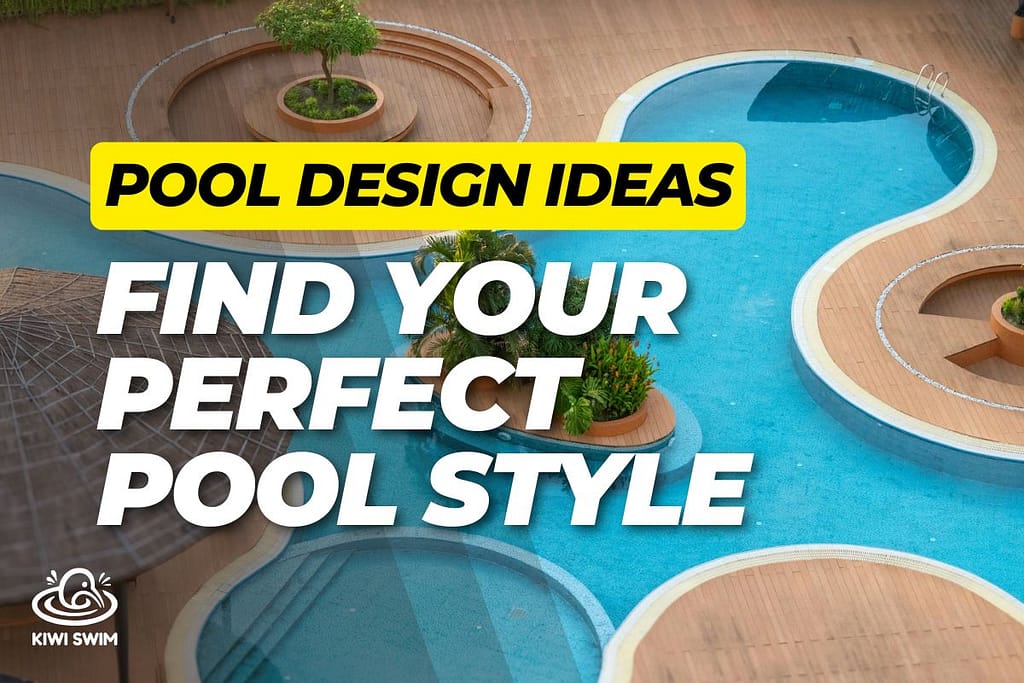
Curved pools have softer outlines and can suit established gardens, traditional homes and outdoor spaces with plenty of planting.
A freeform pool can also help you work around an awkwardly shaped backyard, although irregular edges may make paving, cover installation and cleaning a little more complicated.
Think about how the curves will affect the usable swimming area. A pool can look large from above but offer less uninterrupted space for swimming than a rectangular design with similar overall dimensions.
3. Small plunge pools
A plunge pool is worth considering if your backyard is too small for a conventional swimming pool or you mainly want somewhere to cool off and relax.
A compact pool can leave more room for outdoor dining, planting or a small lawn. It may also require less water and fewer chemicals than a much larger pool, although actual running costs depend on its design, equipment and use.
Plunge pools aren’t automatically cheap. Excavation, access, fencing, paving and filtration can still represent a substantial part of the overall project.
Before choosing one, decide whether you’ll mainly sit and cool off, play with the kids or swim for exercise. Those uses call for different dimensions and depths.
4. Pools for small backyards
If space is limited, think vertically and horizontally about how the pool area will function. A narrow rectangular pool may fit along one side of the property, while a compact design can leave a usable entertaining area beside it.
Useful approaches include:
- Placing the pool along the house rather than in the middle of the yard.
- Using consistent paving to make the area feel less fragmented.
- Choosing built-in seating instead of bulky outdoor furniture.
- Using simple planting rather than large trees close to the pool.
- Keeping the pool equipment in a planned, accessible location.
Remember that a small backyard pool still needs appropriate safety barriers, safe access and enough room for maintenance. Don’t use every available centimetre for water and leave yourself nowhere practical to walk around it.
5. Natural-looking swimming pools
Natural-looking pool designs use stone, timber, greenery and softer shapes to blend the pool into the garden. They can look particularly appealing in properties with mature landscaping or views of the surrounding countryside.
You don’t necessarily need a specialised natural swimming system to achieve this appearance. A conventional filtered pool can still have natural materials, organic planting and a relaxed garden setting.
Be careful about putting too many plants close to the water. Leaves, pollen, soil and other debris add to the cleaning workload and can affect water quality.
If you’re considering a true natural swimming pool that relies on biological filtration or a separate regeneration area, investigate the design and maintenance requirements carefully. It isn’t simply a conventional pool with plants added around the edge.
6. Infinity-edge swimming pools
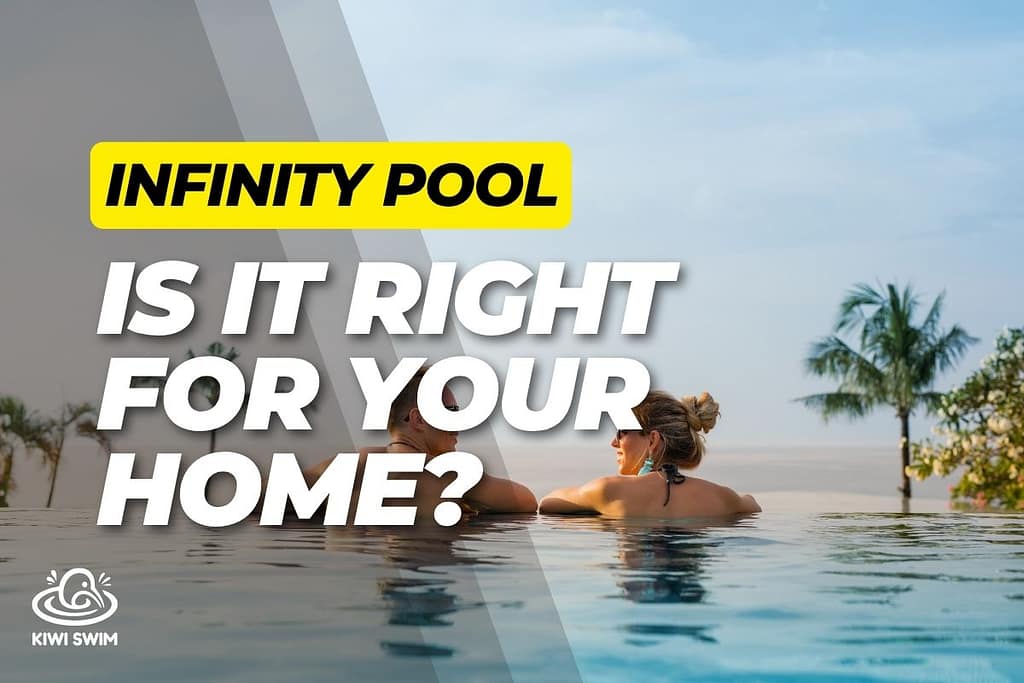
An infinity-edge pool creates the impression that the water flows over an edge, often towards a sea view, lake or distant landscape.
It’s a striking option for sloping properties and homes with an uninterrupted outlook. However, the visual effect comes with extra design and engineering considerations.
An infinity pool generally needs a carefully designed overflow system, a collection or balance tank, suitable circulation equipment and precise construction. The retaining structure and surrounding ground must also be assessed where the pool is built on a slope.
This is a design where professional planning is especially important. The view may be the main attraction, but the structure and water circulation have to work properly behind the scenes.
Pool Colours, Materials and Finishes
The pool shell, interior finish and surrounding materials have a major influence on the final appearance. They also affect how much maintenance the pool area needs.
Pool interior colours
Pool water colour is influenced by the interior finish, water depth, sunlight and the surrounding environment. Samples can help, but it’s worth looking at completed pools in natural daylight before making a final decision.
| Interior finish | General appearance | Things to consider |
|---|---|---|
| White or pale blue | Bright, light blue water | Dirt and marks may be more noticeable |
| Sand or light grey | Soft, natural-looking blue | Appearance changes with depth and light |
| Dark grey or charcoal | Deeper, darker water | Surface temperature and visibility need consideration |
| Aqua or turquoise | Strong tropical feel | The finished shade depends on the material and lighting |
Don’t choose a finish on colour alone. Ask about durability, warranty, repair options and the manufacturer’s maintenance recommendations.
Pool surrounds and paving
The paving or decking around your pool is just as important as the pool itself. It provides a walking surface, creates space for furniture and ties the pool into the rest of the property.
Look for materials that are suitable for wet areas and provide reliable slip resistance. They should also tolerate outdoor exposure, cleaning products and the local climate.
In coastal parts of New Zealand, consider how salt exposure affects metal fittings and other materials. In sunny areas, check how hot the surface gets underfoot during summer.
Timber decking can create a warm, natural appearance, while concrete and paving offer a wide range of styles. Each option has different drainage, cleaning and maintenance requirements.
Pool Landscaping Ideas That Complete the Design
Landscaping can make a pool feel like a natural extension of your home rather than a separate feature dropped into the backyard.
Think about the overall balance between hard surfaces, planting, shade and open space. A pool surrounded entirely by paving may look clean and modern, but some greenery can soften the appearance and provide privacy.
Good landscaping choices include:
- Screening plants: Useful for privacy, provided they’re positioned to minimise debris and don’t interfere with barriers.
- Feature planting: A few carefully chosen plants can create a focal point without overcrowding the pool.
- Raised garden beds: These can help define the pool area, but their position must be considered when designing compliant safety barriers.
- Outdoor seating: A small dining area or built-in bench makes the poolside space more useful when nobody is swimming.
- Lighting: Garden and pathway lights can improve the atmosphere and help people move around the area after dark.
Before planting, consider mature plant size, root growth, leaf drop and access for pruning. Large trees can create substantial cleaning work and may be unsuitable near some pool structures or underground pipework.
Drainage is another detail worth planning early. Water from surrounding gardens and paved areas shouldn’t simply run into the pool, carrying soil and organic debris with it.
Swimming Pool Decking and Outdoor Living Areas
A well-designed pool area should work even when you’re not swimming. Think about where you’ll sit, dry off, supervise children and entertain guests.
If the pool opens onto an outdoor living area, aim for a practical route between the house, seating and water. You don’t want people constantly walking through a narrow gap between furniture and the pool edge.
When planning decking or paving, consider:
- Slip resistance in wet conditions.
- Drainage and surface falls.
- Access to pumps, filters and other equipment.
- Furniture placement and walking routes.
- Sun exposure and shade during summer.
- How the deck or paving interacts with the pool barrier.
Decks, raised platforms and retaining structures can involve additional building requirements depending on their construction and location. Have the design checked before work starts rather than assuming a feature is exempt because it forms part of the landscaping.
Pool Lighting Ideas for Appearance and Practical Use
Lighting can transform a pool area after sunset. Underwater lights highlight the water, while lighting around paths, planting and seating helps connect the pool to the rest of the backyard.
You might consider:
- Underwater lights for visibility and appearance.
- Low-level path lighting around the pool area.
- Garden lighting to highlight trees or feature planting.
- Lighting for outdoor dining and seating areas.
Plan lighting alongside the pool rather than adding it as an afterthought. The location of fittings, wiring routes, power supplies and controls can affect installation costs.
Electrical work around pools must be designed and installed by appropriately qualified professionals. Ask your pool builder or electrician about suitable equipment and the requirements for your particular installation.
Pool Design Features Worth Planning Early
Some features are much easier to incorporate during construction than to add later. Even if you’re working with a modest budget, it pays to decide which ones matter most before finalising the design.
Pool heating and covers
If you want to extend the swimming season, think about heating and a pool cover at the design stage.
A pool heater can make the water more comfortable during cooler weather, but it adds installation and running costs. The right system depends on your pool size, desired water temperature, local climate and how often you swim.
A suitable cover helps reduce evaporation and heat loss. It can also reduce the amount of debris entering the water.
Allow enough space for the cover system and make sure it works with the pool’s shape. If you’re considering a recessed cover, discuss access for maintenance and repairs before construction.
Sunlight, wind and privacy
The position of the pool can have a bigger impact on your enjoyment than its shape.
Where possible, look for a location that receives useful sunlight and is sheltered from prevailing winds. Wind can make swimming less comfortable and increase heat loss and evaporation.
Also consider:
- Whether nearby houses overlook the pool.
- The position of trees and buildings that create shade.
- How much sun the pool receives in winter compared with summer.
- Whether a windbreak will interfere with pool safety barriers.
- Where the sun falls on the outdoor seating area.
Don’t assume the sunniest-looking spot will remain sunny throughout the day. Observe the yard at different times, particularly if neighbouring buildings or mature trees create shadows.
Steps, benches and shallow areas
Built-in steps and seating can make a pool more comfortable for relaxing and easier to enter and exit. A shallow area may also suit families who want somewhere to sit or play in the water.
However, these features take up swimming space and add complexity to the pool’s shape. They can also create areas where water circulation needs particular attention.
Decide what each feature is meant to achieve. If swimming laps is a priority, you may prefer to keep most of the pool’s length unobstructed.
How to Match a Pool Design to Your Lifestyle
The best design isn’t necessarily the most expensive or visually impressive. It is the one that suits the way you’ll actually use the pool.
| Your priority | Designs worth considering | What to keep in mind |
|---|---|---|
| Family recreation | Rectangular or freeform pool | Safe access, usable shallow areas and supervision |
| Swimming for exercise | Long rectangular or lap pool | Uninterrupted length and suitable depth |
| Relaxation in a small yard | Plunge pool or compact rectangular pool | Seating, privacy and efficient use of space |
| Entertaining | Pool with generous decking or paving | Furniture, shade and access from the house |
| Scenic outlook | Infinity-edge or view-facing design | Engineering, structural support and budget |
| Natural garden appearance | Freeform pool or natural-style landscaping | Plant debris, drainage and maintenance |
| Cooler-weather swimming | Heated pool with a suitable cover | Insulation, energy use and running costs |
You don’t have to choose just one purpose. A family pool can also look modern, and a compact pool can still be a good place to relax. The important thing is to identify your main priority before trying to fit every possible feature into the design.
New Zealand Pool Design and Building Requirements
Before committing to your preferred design, check the building and safety requirements that apply to your property.
Pool barriers and safety
In New Zealand, residential pools capable of being filled to a depth of 400 mm or more generally require a compliant barrier to restrict access by unsupervised children under five. The requirements also apply to many temporary and above-ground pools. Certain small heated pools may use a compliant safety cover instead of a surrounding barrier.
The design needs to account for the barrier from the beginning. Fences, gates, nearby structures, raised garden beds and other features can affect compliance.
For the current requirements, read the official Building Performance guidance on residential pool barriers. Check with your local council before construction, especially if the design uses the house or an existing structure as part of the barrier.
Building consent and site conditions
Pool construction and associated building work may require building consent, although exemptions apply to some work. Even where the pool itself qualifies for an exemption, the barrier generally has separate consent requirements.
Your design may also be affected by:
- Sloping ground and retaining structures.
- Ground stability and soil conditions.
- Drainage and stormwater management.
- Underground services and access for excavation.
- Boundary setbacks and other applicable planning requirements.
- The location of existing buildings and outdoor structures.
Don’t assume a pool can be installed anywhere on your property simply because it fits on a plan. Ask your pool builder and council to identify the relevant requirements before you commit to a layout.
Common Pool Design Mistakes to Avoid
A pool can look excellent on paper but become frustrating if practical details are overlooked.
Choosing appearance over function
A dramatic shape or oversized feature may look impressive, but it can reduce usable swimming space or make cleaning more awkward.
What to do instead: Decide how you want to use the pool first, then choose a design that supports those activities.
Underestimating the space needed around the pool
Fitting the pool into the yard doesn’t mean the entire project will fit comfortably. You’ll still need room for barriers, walking routes, seating and equipment access.
What to do instead: Plan the pool and surrounding area together, using the actual property dimensions.
Forgetting about ongoing maintenance
Complex shapes, nearby trees and awkward equipment locations can increase cleaning and maintenance work.
What to do instead: Consider how a cleaner will move around the pool, how leaves will be removed and whether you can easily reach pumps, filters and valves.
Leaving safety planning until the end
A pool barrier can influence the entire layout. Adding one late may interfere with landscaping, access or the view from the house.
What to do instead: Include barrier requirements in the initial design and have the proposed arrangement checked before construction.
Spending the entire budget on the pool shell
The pool itself is only one part of the finished project. Excavation, fencing, paving, landscaping, heating and equipment can add significantly to the total cost.
What to do instead: Obtain a detailed project estimate that includes the surrounding work and a contingency for unexpected site conditions.
When to Get Professional Advice
You can do plenty of research yourself before choosing a pool design. Collecting ideas, measuring your backyard and deciding how you’ll use the pool are all useful first steps.
Professional advice becomes particularly important when the project involves:
- Excavation near existing buildings or boundary structures.
- Sloping ground, retaining walls or uncertain soil conditions.
- Infinity edges or other complex structural features.
- Building consent, pool barriers or planning restrictions.
- Electrical installations, heating systems or complex plumbing.
- Unusual pool shapes or specialist filtration systems.
A good pool builder should explain the advantages and disadvantages of different options, identify site constraints and provide a clear breakdown of what is included in the quote.
It’s also worth discussing maintenance with someone who understands residential pools. A design that is easy to clean, access and operate can save you considerable frustration over the years.
Frequently Asked Questions
What is the best swimming pool design for a backyard?
The best design depends on your available space, budget and intended use. Rectangular pools are versatile and suit many modern properties, while plunge pools work well in compact yards. Freeform designs can complement established gardens, and lap pools suit people who want to swim for exercise.
What is the most popular swimming pool shape?
Rectangular pools are a common choice because they suit a wide range of properties, provide useful swimming space and work well with contemporary landscaping. However, the best shape for your property depends on its dimensions, layout and the way you intend to use the pool.
How do I make a small backyard look good with a pool?
Choose a pool that leaves enough room for walking, seating and landscaping. Simple shapes, consistent paving, carefully placed greenery and built-in seating can help a small space feel organised. Avoid filling the entire yard with water at the expense of practical outdoor living space.
What should I consider when designing a swimming pool in New Zealand?
Consider sunlight, wind exposure, ground conditions, drainage, access for construction, ongoing maintenance and the availability of suitable equipment. You’ll also need to plan for applicable building requirements and a compliant pool barrier. Check the details with your local council and pool builder before construction.
Are dark-coloured swimming pools a good idea?
Dark pool finishes can create a striking, contemporary appearance and make the water look deeper in colour. However, the final appearance depends on sunlight, water depth and the surrounding materials. Ask to see completed examples and consider surface temperature, visibility and the manufacturer’s guidance before choosing a finish.
What adds the most cost to a swimming pool design?
Costs depend on the site and the type of pool. Excavation, difficult access, structural engineering, retaining work, specialist features, heating, fencing and extensive landscaping can all add to the project cost. Request a detailed quote that covers the complete installation rather than comparing pool shell prices alone.
Final Thoughts on Swimming Pool Design Ideas
The best swimming pool design ideas are the ones that combine an attractive appearance with practical everyday use. Think about the pool’s shape and size, but also consider the surrounding landscaping, decking, lighting, privacy, equipment and ongoing maintenance.
For New Zealand homeowners, getting the site conditions and safety requirements right from the beginning is just as important as choosing a style you love.
Start by deciding what you want from your pool, measuring the available space and setting a realistic overall budget. From there, you can narrow down the designs that suit your property and work with a qualified pool professional to turn your ideas into a workable plan.