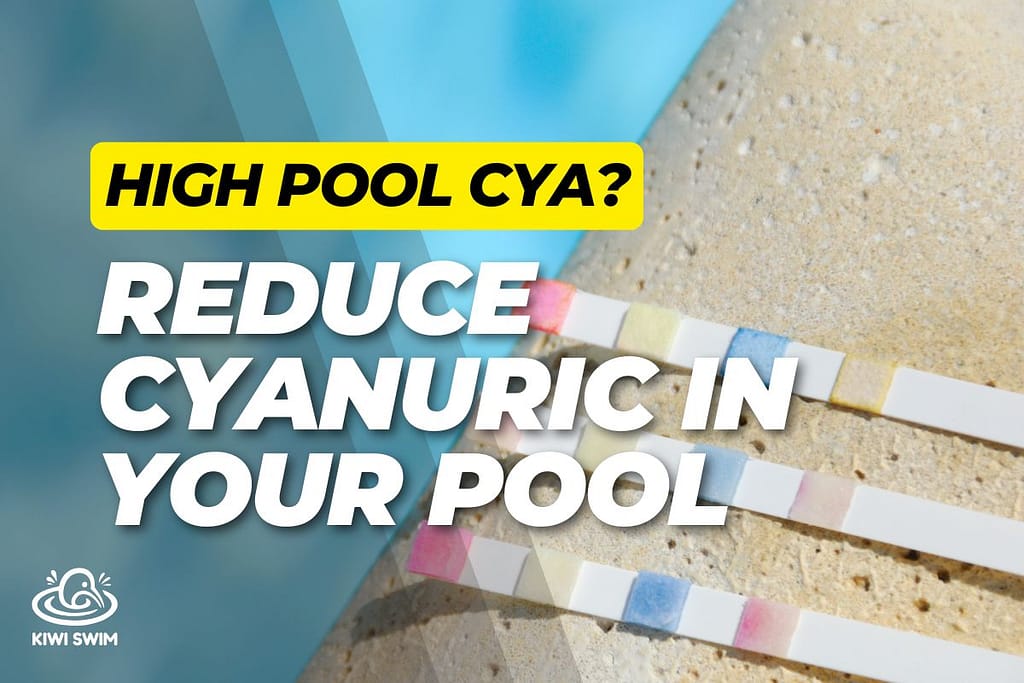
If you’re trying to work out how to lower cyanuric acid in pool water, you’re definitely not alone. High CYA is one of the most common problems I see across New Zealand pools, especially after a long summer of topping up chlorine and fighting algae.
The frustrating part is this. Your chlorine test might look fine, yet the pool still goes cloudy, algae keeps creeping back, or you’re burning through chemicals way faster than you should. Nine times out of ten, high cyanuric acid is the real culprit.
I’ll walk you through exactly what cyanuric acid does, why it builds up, and how to lower it safely and effectively. This is written from a real-world pool maintenance perspective, not textbook theory. Everything here is suitable for DIY pool owners and based on what actually works in NZ conditions.
First, what is cyanuric acid and why does it matter?
Cyanuric acid, often called CYA or stabiliser, protects chlorine from being destroyed by the sun’s UV rays. With our intense NZ summer sun, some stabiliser is essential for outdoor pools.
Think of CYA like sunscreen for your chlorine. Without it, sunlight can wipe out most of your chlorine in a few hours.
But too much sunscreen and things stop working properly.
When CYA gets too high, it binds to chlorine and makes it far less effective. You might still measure chlorine in the water, but it’s not strong enough to sanitise properly.
Ideal CYA range for NZ pools
For most residential pools in New Zealand, I recommend:
- 30 to 50 ppm for manually chlorinated pools
- 50 to 70 ppm for saltwater pools
Once CYA creeps above about 80 ppm, problems start stacking up fast.
Signs your cyanuric acid is too high
High CYA doesn’t always announce itself clearly, but these are common red flags:
- Chlorine readings look fine but algae keeps returning
- You need to add more and more chlorine for the same result
- Cloudy water that won’t clear properly
- Strong chlorine smell but poor sanitation
- Shocking the pool barely makes a difference
If you’re nodding along to any of these, testing CYA should be your next move.
What causes cyanuric acid to get too high?
High CYA is nearly always human-caused. It doesn’t just appear on its own.
Overuse of stabilised chlorine
The biggest cause is using too much:
- Trichlor tablets
- Dichlor granules
These products contain cyanuric acid built in. Every time you add them, you’re adding stabiliser whether you need it or not.
This is especially common in tablet-fed pools where the feeder is left running all season.
Topping up instead of draining
Many NZ pool owners avoid draining due to water restrictions or cost. That makes sense, but topping up without ever removing water allows CYA to accumulate year after year.
Rain helps a bit, but not enough to offset constant stabilised chlorine use.
Poor or infrequent testing
CYA isn’t part of many basic test strips and often gets ignored. By the time it’s checked, it’s already well above where it should be.
What you’ll need before lowering cyanuric acid
What to have ready before you start
Before you do anything, make sure you’ve got the basics sorted. This makes the process smoother and avoids costly mistakes.
- A reliable pool water test kit that includes CYA
- A way to partially drain your pool safely
- A garden hose for refilling
- Access to fresh mains water
- Unstabilised chlorine (liquid chlorine or calcium hypochlorite)
- Time and patience
Optional but helpful:
- A submersible pump if draining large volumes
- A pool brush and vacuum
- A notebook to track test results
How to lower cyanuric acid in pool water properly
Here’s the hard truth. There is no chemical that safely removes cyanuric acid from pool water.
Ignore products that claim to magically reduce CYA. In real-world conditions, they’re unreliable at best and expensive at worst.
The only consistently effective method is water replacement.
Step-by-step: lowering CYA by partially draining your pool
Step 1: Test and confirm your CYA level
Don’t guess. Test it.
If your CYA is:
- 60 to 80 ppm: minor action needed
- 80 to 120 ppm: partial drain recommended
- 120+ ppm: more aggressive water replacement required
Step 2: Work out how much water to replace
CYA dilution is fairly straightforward.
- Drain 25 percent of the water to reduce CYA by about 25 percent
- Drain 50 percent to halve it
For example:
If your pool is 40,000 litres and your CYA is 100 ppm, draining 20,000 litres should bring it close to 50 ppm.
Never fully drain a concrete or fibreglass pool unless advised by a professional. Groundwater pressure can cause serious damage.
Step 3: Drain safely and slowly
- Turn off the pump before draining
- Use a waste line or submersible pump
- Avoid draining during heavy rain or when groundwater is high
- Stay within local council water rules
If you’re unsure, partial drains done in stages are safer than one big drain.
Step 4: Refill and circulate
Refill with mains water, then run the pump for at least 24 hours to fully mix the water before retesting.
Step 5: Retest and rebalance
Once mixed, retest:
- Cyanuric acid
- Free chlorine
- pH
- Total alkalinity
CYA reduction often throws other levels slightly out. That’s normal and easy to correct.
Switching chlorine types to stop CYA climbing again
This is where most people slip up.
If you go straight back to stabilised chlorine, your CYA will climb again in no time.
I recommend switching to:
- Liquid chlorine
- Calcium hypochlorite
These add chlorine without adding more stabiliser. This topic is covered in more detail in our guide on pool chlorine types and when to use each.
Common mistakes that make high CYA worse
- Using chlorine tablets as the only sanitiser year-round
- Shocking repeatedly without checking CYA
- Believing “chlorine locked” myths instead of testing
- Ignoring stabiliser levels until algae appears
- Adding more chemicals instead of removing water
High CYA problems are usually made worse by throwing more product at the pool instead of stepping back and checking the chemistry.
How long it takes to lower cyanuric acid
This is one area where a lot of pool owners get caught out, so let’s set expectations properly.
Lowering cyanuric acid in pool water is not instant. Unlike pH or chlorine, CYA doesn’t break down quickly on its own. In most residential pools, the only reliable way to reduce it is by physically removing water that contains CYA and replacing it with fresh water.
Here’s what’s realistic:
Partial drain and refill
You’ll see results as soon as the refill is complete and the water is mixed. Retest after 24 hours of circulation.
Multiple small drains
Results are gradual. Each drain lowers CYA a bit more, usually over several days.
Waiting for natural dilution
This can take months, even over a full winter, and isn’t dependable.
If your CYA is extremely high, say over 120 ppm, it may take two or three partial drains to bring it back into a usable range. That’s normal.
When chlorine starts working again
One of the first signs you’ve lowered CYA enough is that chlorine suddenly becomes effective again.
You might notice:
- Chlorine holds overnight
- Algae stops coming back
- You need less chlorine to maintain levels
- The pool looks brighter and clearer
That’s your reward for doing the hard yards.
What to avoid when lowering CYA
This is where well-meaning advice can make things worse.
Don’t just keep adding chlorine
Adding more chlorine does not fix high CYA. In fact, if you’re using stabilised chlorine, it actively makes the problem worse.
I’ve seen pools with sky-high chlorine readings that are still green because the CYA is off the charts. More chlorine isn’t the answer.
Avoid CYA removers and miracle fixes
You’ll see products claiming to reduce cyanuric acid without draining. In theory, some can break CYA down biologically. In practice, results are inconsistent, slow, and often not worth the cost.
I don’t recommend relying on them, especially in a New Zealand climate where water temperature and UV levels vary a lot.
Don’t drain too much at once
Fully draining a pool can cause serious structural issues, especially with:
- Fibreglass pools
- Vinyl liner pools
- Pools in high water table areas
If you’re unsure, partial drains are safer. When in doubt, stop and get advice.
Don’t forget to rebalance everything else
After refilling, your pool chemistry will change.
Always retest and adjust:
- pH
- Total alkalinity
- Calcium hardness
- Free chlorine
Fresh water is great, but it still needs balancing.
Common misconceptions about cyanuric acid
Let’s clear up a few things I hear all the time.
“CYA evaporates over time”
It doesn’t. Water evaporates, CYA stays behind. If anything, evaporation makes CYA more concentrated.
“Rain will fix high CYA”
Heavy rain can help slightly, but only if you physically remove water afterwards. Overflow alone rarely makes a meaningful dent.
“More stabiliser means better chlorine protection”
Up to a point, yes. Beyond that, it strangles chlorine and causes endless problems.
“Saltwater pools don’t get high CYA”
They absolutely can. If a salt pool is topped up with stabilised chlorine or stabiliser granules, CYA can climb just like any other pool.
Preventing high CYA in the future
Once you’ve done the hard work to lower cyanuric acid in pool water, the goal is to never deal with it again.
Here’s how I recommend staying on top of it.
Choose the right chlorine long-term
For ongoing maintenance:
- Use liquid chlorine or bleach where possible
- Avoid routine use of stabilised chlorine tablets
- Keep trichlor tabs for holidays or short-term use only
This is covered in more detail in our guide on pool chlorine tablets and when to actually use them.
Test CYA regularly
Don’t wait until something goes wrong.
- Test CYA at the start of summer
- Test again mid-season if you use tablets
- Always test if chlorine suddenly stops working
Most pool shops in NZ offer free testing, but it’s worth having a decent home test kit so you know what’s happening week to week.
Keep stabiliser additions deliberate
If you ever add cyanuric acid directly, do it intentionally and sparingly.
I recommend:
- Adding stabiliser only when CYA is below 30 ppm
- Never adding it “just in case”
- Measuring and recording how much you add
Use winter to your advantage
Over winter, natural rainfall and controlled water replacement can gently reduce CYA without stress.
This is also a good time to review your chemical routine so you don’t repeat the same cycle next summer.
When to call a professional
Most pool owners can manage high CYA themselves, but sometimes it’s worth handing it over.
Consider getting help if:
- Your CYA is extremely high and you’re unsure how much to drain
- The pool is green and won’t clear despite correct chemistry
- You have a fibreglass or vinyl pool and are worried about draining
- You’re losing water and don’t know where it’s going
A good pool technician will calculate safe drain volumes, protect your pool structure, and rebalance everything properly afterwards.
Frequently Asked Questions
1. What is the ideal cyanuric acid level in a pool?
For most New Zealand pools, 30 to 50 ppm is ideal. Saltwater pools can run slightly higher, but anything over 70 ppm starts causing problems.
2. Can I lower cyanuric acid without draining the pool?
Realistically, no. Partial draining and refilling is the most reliable method. Products that claim otherwise have mixed results at best.
3. How much water do I need to drain to lower CYA?
Rough rule: draining 25 percent of the pool lowers CYA by about 25 percent. Multiple small drains are safer than one big one.
4. Does backwashing remove cyanuric acid?
Yes, but only a little. Regular backwashing helps prevent CYA from climbing further, but it won’t fix a high reading on its own.
5. Is high CYA dangerous to swim in?
It’s not usually harmful to swimmers, but it makes chlorine ineffective. That means bacteria and algae are more likely to grow.
Final thoughts on how to lower cyanuric acid in pool water
High cyanuric acid is one of the most frustrating pool problems because it sneaks up slowly and makes everything else harder.
The good news is this: once you understand what causes it and how to fix it, it’s completely manageable.
Lowering cyanuric acid in pool water comes down to smart testing, controlled water replacement, and changing how you chlorinate moving forward. Do that, and you’ll find your pool becomes easier to maintain, clearer, and far more forgiving.
If your chlorine hasn’t been behaving lately, don’t blame yourself. Check your CYA. Chances are, it’s the missing piece.