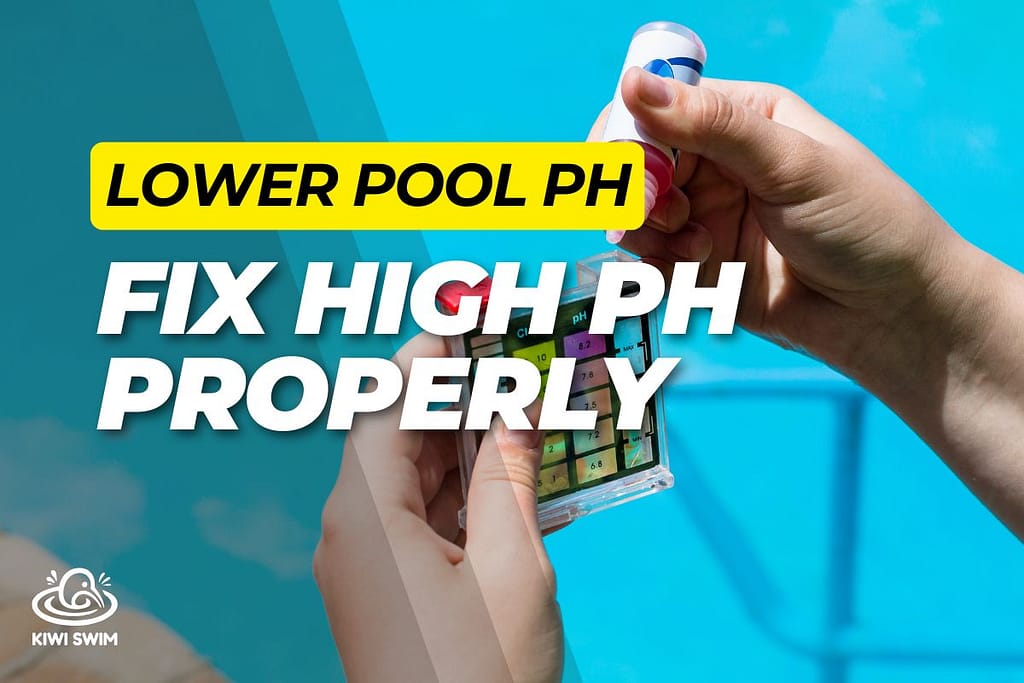
If you’ve just tested your pool and the pH is too high, you’re not doing anything wrong. High pH is one of the most common pool chemistry problems I deal with, especially through summer when pools get heavy use and chlorine demand goes through the roof.
A high pH level can leave your water looking dull, reduce how well chlorine works, and cause sore eyes or itchy skin. Left unchecked, it can also lead to scaling on tiles, heaters, and salt cells. The good news is that learning how to lower pool pH level properly is very achievable for most pool owners, as long as you take a measured approach and understand what’s causing the problem.
In this guide, I’ll explain exactly how to lower pool pH level safely, why it keeps rising in the first place, and how to stop it becoming a constant chore. This advice is based on real-world pool maintenance here in NZ, not textbook theory.
What pH level should your pool actually be?
Before fixing anything, you need a clear target.
For residential swimming pools in New Zealand, the ideal pH range is:
- 7.2 to 7.6
When your pH level creeps above this range:
- Chlorine becomes far less effective
- Water can turn cloudy or dull
- Calcium scale is more likely to form
- Swimmers may experience eye and skin irritation
If pH drops too low, the water becomes corrosive and uncomfortable, so balance is key. That said, high pH is far more common than low pH in Kiwi pools.
What you’ll need before you start
Getting everything ready first makes the process safer and avoids rushed decisions.
Gear and supplies to have on hand
- A reliable pool test kit or digital tester
Test strips are fine for quick checks, but liquid kits or digital testers give more dependable results. - Hydrochloric acid (pool acid)
This is the most commonly used product in New Zealand for lowering pool pH. - Protective gear
Gloves and eye protection at a minimum. - A chemical-only measuring jug
- A running pump with good water circulation
I recommend liquid hydrochloric acid over dry acid for most home pools. It works quickly, doesn’t add unwanted by-products, and is widely used by professionals across NZ.
Why pool pH level rises so often
Understanding the cause helps you fix the problem properly instead of just treating the symptoms.
The main reasons pH climbs in NZ pools
- Chlorine additions
Liquid chlorine and calcium-based chlorines tend to push pH upward over time. If you’re topping up chlorine frequently, expect to manage pH as well. - High UV exposure
New Zealand’s UV intensity is no joke. As chlorine breaks down under sunlight, it can cause chemical shifts that drive pH higher. - High total alkalinity
Alkalinity acts like a buffer. When it’s too high, it resists pH change and forces pH to climb back up after treatment. - Aeration and water movement
Waterfalls, spa spillovers, deck jets, and even lots of splashing release carbon dioxide from the water, which naturally raises pH. - Fresh water top-ups
Many council water supplies are slightly alkaline. Regular top-ups slowly push your pool pH level higher.
Most pools have a mix of these factors at play, which is why pH correction isn’t usually a one-off job.
How to lower pool pH level safely (step by step)
This method is suitable for DIY pool owners and mirrors how professionals handle residential pools.
Step 1: Test the water properly
Test with the pump running and the water circulating. If your pH is above 7.8, it’s time to bring it down. If it’s only slightly high, aim for a gentle correction.
Step 2: Check total alkalinity first
This step is often skipped and causes ongoing frustration.
- Ideal total alkalinity range: 80 to 120 ppm
If alkalinity is well above this, pH will keep rebounding. You can still lower pH, but expect it to rise again until alkalinity is corrected.
Step 3: Calculate a conservative acid dose
As a general guide for 32% hydrochloric acid:
- 100 mL per 10,000 litres will typically reduce pH by about 0.1 to 0.2
This depends on alkalinity, so always start small. It’s far easier to add more acid later than to fix a pH crash.
Step 4: Add the acid correctly
- Make sure the pump is running
- Slowly pour the acid into the deep end of the pool
- Keep the container close to the water surface
- Move as you pour, don’t dump it in one spot
- Never add acid through the skimmer
Avoid breathing in fumes and keep your face and body clear of splashes.
Step 5: Circulate and retest
Let the pool circulate for 30 to 60 minutes, then retest the pH. If it’s still high, repeat with a smaller follow-up dose.
Slow adjustments lead to stable water.
How long does it take for pH level to drop?
In most residential pools:
- Initial pH movement happens within 30 minutes
- Full mixing and stabilisation takes a few hours
If pH barely moves after several careful doses, high alkalinity is almost always the underlying issue. Adding more acid without addressing alkalinity just turns into a cycle.
What to avoid when lowering pool pH level
Lowering pH isn’t complicated, but there are a few traps that can cause damage or undo your hard work if you’re not careful.
Avoid these common issues
- Don’t chase the numbers
Constantly tweaking pH every day usually leads to overcorrection. Test, adjust, then give the water time to settle before changing anything again. - Don’t pour acid into one spot
Concentrated acid sitting on the floor or against the walls can etch plaster, bleach liners, and damage finishes over time. - Don’t add acid through the skimmer
This sends highly acidic water straight through pumps, heaters, and chlorinators, which can shorten their lifespan. - Don’t mix chemicals
Never add acid and chlorine at the same time. Always allow at least a few hours between chemical additions. - Don’t ignore safety
Hydrochloric acid fumes are strong. Always pour slowly, keep your face back, and rinse any splashes immediately with fresh water.
Why your pool pH level keeps rising after you fix it
This is one of the most frustrating situations for pool owners. You lower the pH, it looks good for a day or two, then it’s high again.
In most cases, the problem isn’t the acid. It’s the water balance behind the scenes.
The usual culprits
- High total alkalinity
If alkalinity is sitting above 140 ppm, pH will rebound no matter how carefully you dose acid. - Saltwater chlorinators
Salt systems naturally increase pH due to hydrogen gas release at the cell. This is normal, but it means more frequent pH management. - Frequent chlorine top-ups
Especially liquid chlorine. Each dose nudges pH upward. - Water features and aeration
The more bubbles and splashing, the faster pH rises.
If this sounds like your pool, the fix isn’t more acid. It’s controlling alkalinity and adjusting how you manage your sanitation.
How to stop high pH from coming back
Prevention saves time, money, and frustration.
Practical prevention tips
- Keep alkalinity in range
Aim for 80 to 120 ppm. This gives pH stability without constant rebound. - Test weekly in summer
Strong UV and heavy swimming load can shift chemistry quickly. - Add acid little and often
Small regular corrections are better than big swings. - Run the pump long enough
Good circulation helps chemicals mix evenly. - Be mindful of top-ups
After large water additions, always recheck pH.
Saltwater pool owners in particular should expect to manage pH as part of normal maintenance. It’s not a fault, just chemistry.
When lowering pool pH level becomes a professional job
Most pH issues are DIY-friendly, but there are times when expert help makes sense.
Consider calling a pool professional if:
- pH keeps rising daily despite correct dosing
- Alkalinity won’t come down into range
- You see scale forming on tiles or heaters
- Your pool has expensive finishes or heating equipment
- You’re unsure how to safely handle acid
A professional can test with calibrated equipment and adjust chemistry without risking damage.
Frequently Asked Questions
1. Can I lower pool pH level without acid?
In most cases, no. Acid is the most reliable and controlled way to reduce pH. Other methods are slow, inconsistent, or affect other chemistry levels.
2. Is dry acid safe to use?
It can be, but it adds sulphates to the water, which isn’t ideal for long-term balance. Liquid hydrochloric acid is generally preferred in NZ.
3. How often should I lower my pool pH level?
That depends on your pool. Some need weekly adjustment in summer, others less often. Regular testing tells the story.
4. Should I lower alkalinity or pH first?
If alkalinity is very high, addressing it first makes pH control much easier. They’re closely linked.
5. Can high pH damage my pool?
Yes. Over time it can cause scaling, cloudy water, reduced chlorine effectiveness, and irritation for swimmers.
Final thoughts on how to lower pool pH level
Learning how to lower pool pH level properly is one of the most useful skills you can have as a pool owner. High pH is common in New Zealand pools, especially during summer, but it’s also very manageable with the right approach.
Test accurately, make small adjustments, respect the chemistry, and don’t ignore alkalinity. If you do that, your water will stay clearer, your chlorine will work better, and your pool will be far more enjoyable to swim in.
You don’t need to be a chemist to get this right. With a bit of patience and consistency, you can keep your pool pH level right where it should be.